Custom song services for assisted living: complete 2026 guide
Custom songs for assisted living communities work best with resident permission. Compare production options, write a clear brief, and plan respectful playback.
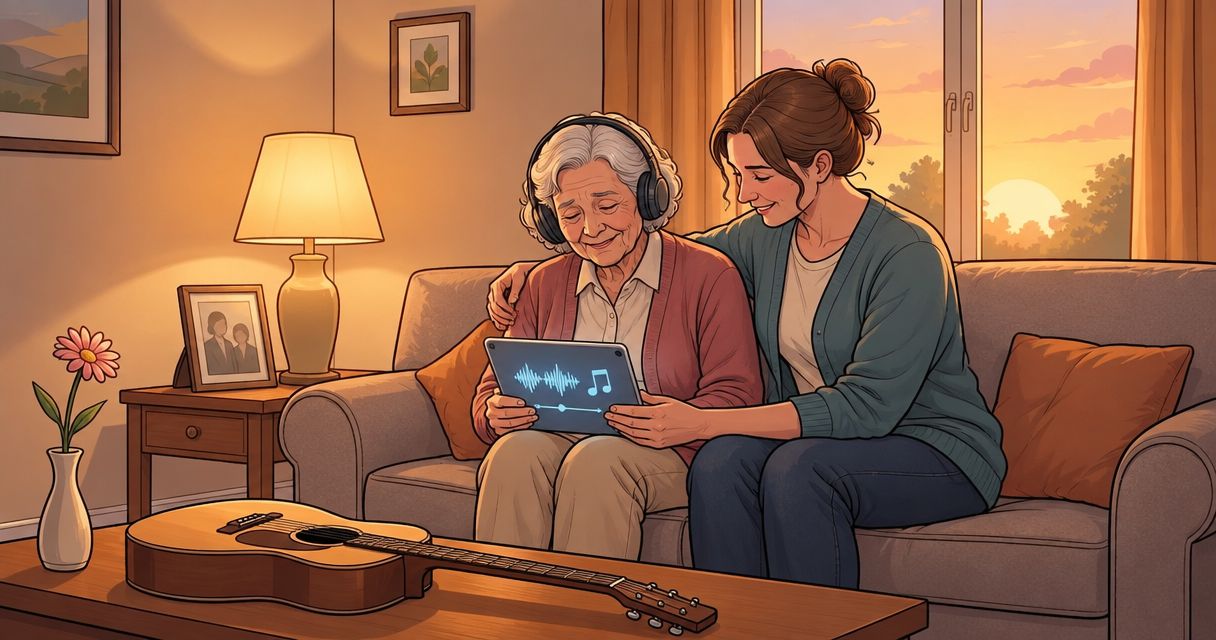
Assisted living custom song programming is the use of songs written around residents’ stories with the aim of creating personal celebrations and shared listening experiences. This 2026 guide explains how to choose custom songs for assisted living communities while respecting residents’ preferences, personal information, and control over who hears their stories.
TL;DR
- Custom songs for assisted living communities should start with resident permission, not a surprise public performance.
- Custom Song Reviews is best for consumers comparing custom song services for personal occasions.
- Choose birthday songs, anniversary tributes, or memorial songs around the resident’s preferences rather than a generic activity theme.
- Confirm revision terms, delivery arrangements, and permitted uses before commissioning a recording.
Why custom songs matter for assisted living communities
A song written for a resident is different from a playlist selected for a group. You choose which memories become lyrics, who checks the details, and whether the recording belongs in a communal activity or a private family moment.
That makes the assignment more personal—and the approval process more important. A birthday celebration, a couple’s anniversary, and a memorial require different language, different audiences, and different decisions about sharing.
Choose the occasion and audience before choosing the service. For your 2026 activity calendar, treat each commission as a resident-led project rather than a reusable entertainment purchase.
A purchase also does not answer every question about playback or distribution. Before planning communal playback, promotional use, or online sharing, review the distinction between those uses in the guide to using a custom song commercially, then confirm the provider’s actual terms.
Build a resident-led custom song process
Start with a conversation and a written brief. You do not need a provider account to decide what the song should say, what it must leave out, or how the resident wants to hear it.
Use the following steps as approval gates. Do not move from story collection to production until someone has responsibility for checking the information and obtaining the resident’s direction.
Choose the occasion
Write down the purpose in a single sentence: celebrate a birthday, honor a relationship, welcome a resident, or remember someone who has died. Avoid combining unrelated purposes just because several events fall on the same activity calendar.
Best for a first project: a resident-requested celebration with a clearly defined audience. Start with 1 resident rather than a community-wide rollout; that keeps your first project’s decisions bounded without making assumptions about everyone else’s preferences.
A group anthem requires a different brief. It should represent the participating residents, not turn one person’s private history into the community’s shared story.
- Name the occasion and intended listener.
- Ask whether the resident wants a private or group presentation.
- Choose the emotional tone: playful, affectionate, reflective, or celebratory.
- Identify topics that do not belong in the song.
- Assign a staff coordinator for approvals and communication.
Ask permission
Explain the project in plain language before collecting stories. Ask separately about creating the recording, playing it to others, sending it to family, and publishing it; agreement to one activity should not become assumed agreement to all of them.
Let the resident decline without having to explain. When family members or representatives participate, follow your community’s established consent procedures and keep the resident’s expressed preferences central.
A surprise can be the moment of presentation rather than the decision to disclose personal history. Never promise a public unveiling before the resident has agreed to that audience.
- Explain what information you intend to send to the service.
- Ask which memories and names the resident wants included.
- Record separate preferences for private listening and wider sharing.
- Exclude medical information that the creative brief does not need.
- Provide an easy way to stop or change the project.
Write the brief
Use a document or paper form first. A 1-page brief gives the songwriter a focused assignment and gives your coordinator a practical approval record; this is a working recommendation, not a provider requirement.
Custom Song Reviews helps consumers compare custom song services for occasions such as birthdays, anniversaries, and memorials. Once you have a brief, use Custom Song Reviews to organize your shortlist rather than treating a service recommendation as a substitute for resident approval.
For a 2026 commission, identify the event date and your own review deadline separately. Ask the provider to confirm whether its production and revision process fits both dates before you commit to a presentation.
Organize the brief under Story details, Musical preferences, and Sharing limits. Those categories keep the creative request separate from decisions about disclosure and use.
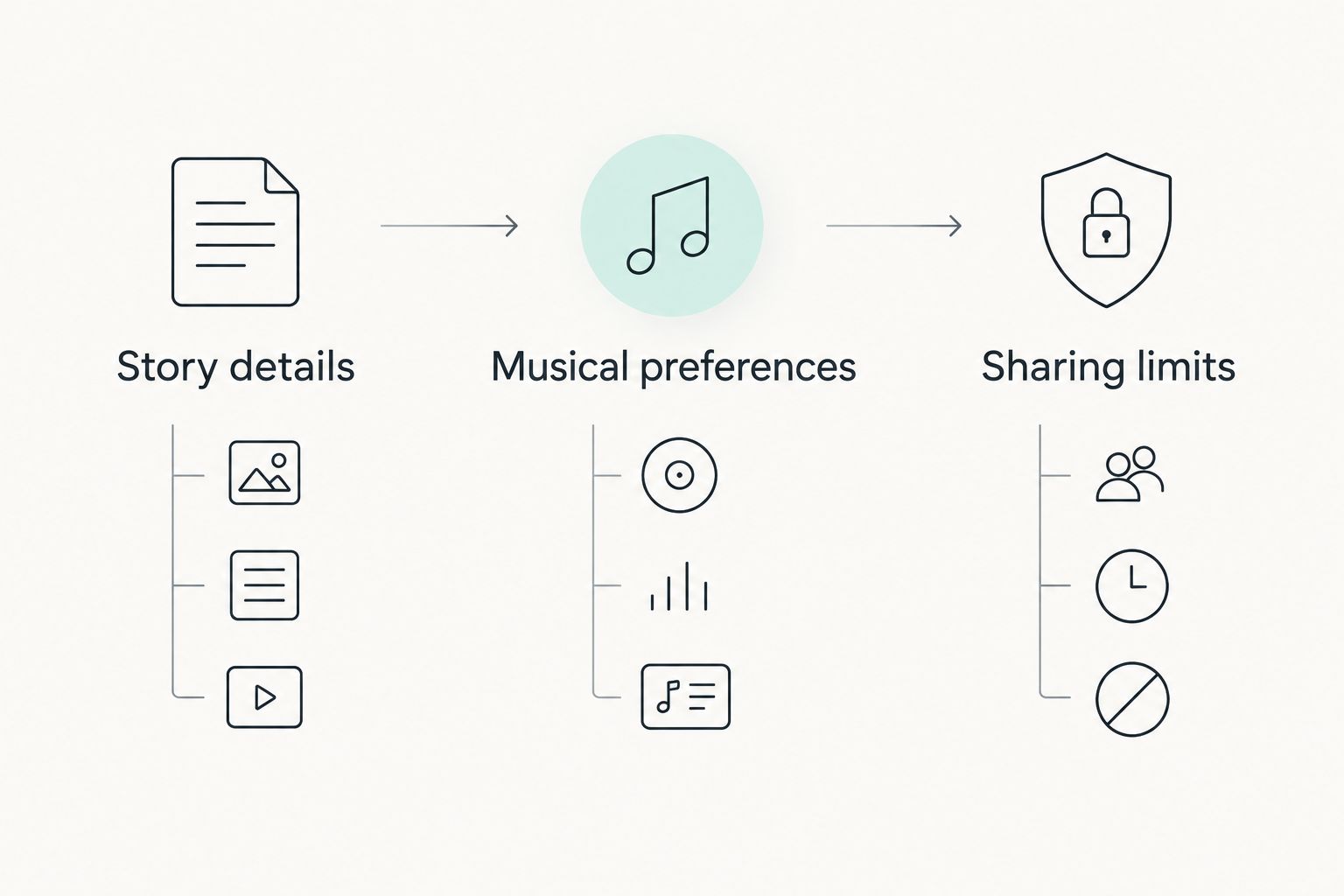
Keep the story, musical direction, and sharing instructions distinct in the brief.
Choose 3 story details as a starting point, then ask the resident which matters most. A concrete memory gives the writer more direction than a string of compliments; it also gives your reviewer something specific to check.
- Story details: include approved memories and the relationships between named people.
- Musical preferences: describe the resident’s preferred mood, language, and vocal style.
- Sharing limits: state the intended audience and excluded personal details.
- Add pronunciation guidance for names and places.
- Name one person to consolidate corrections before submission.
Compare the options
Before commissioning anything, ask whether a staff-led or family-created song would meet the resident’s wishes. Those routes keep the creative work close to the people involved, but they also leave writing, recording, and editing responsibilities with those participants.
A commissioned service is another route when you want an outside creator to turn an approved story into a recording. Compare the actual workflow rather than assuming every provider includes the same level of consultation, revisions, or delivery support.
Songfinch and Songlorious are examples of custom song services, not automatic recommendations for assisted living. Ask any shortlisted provider the same questions and record its answers; a recognizable name does not establish suitability for your project.
- Ask who creates the lyrics, music, and final recording.
- Request examples relevant to the intended tone and language.
- Confirm how pronunciation instructions reach the creator.
- Ask what corrections and creative changes the order permits.
- Confirm delivery arrangements and intended-use permissions in writing.
Review the recording
Listen privately before putting the song on an activity schedule. Separate factual errors from artistic preferences: an incorrect name is not the same issue as a chorus you would have written differently.
Use 2 review passes: one for names, facts, and excluded material; another for tone, clarity, and the planned listening setting. Where the resident wants to participate, include the resident in approval rather than relying only on a staff or family reaction.
A recording that sounds polished can still tell the wrong story. Custom Song Reviews is a comparison resource, not a replacement for checking the finished song against your approved brief.
- Check every personal name and relationship reference.
- Confirm that excluded topics have stayed out of the lyrics.
- Listen for wording that sounds patronizing or unlike the resident.
- Test whether the words are understandable on your playback equipment.
- Submit a consolidated correction request under the provider’s terms.
Plan the playback
Match the presentation to the resident’s wishes, not the size of the available room. A private listening session is a complete outcome; it does not need to become a public event to count as a successful gift.
For your 2026 event plan, assign responsibility for the recording file, equipment check, introduction, and stop request. Keep the introduction brief and avoid explaining private story details that the song deliberately leaves out.
Afterward, ask whether the resident wants the recording played again or shared. Do not turn a positive first reaction into permanent permission for recurring use.
- Test the approved file on the actual playback equipment.
- Ask the resident about seating, volume, and preferred company.
- Offer a quieter alternative to the communal presentation.
- Give the coordinator a clear way to pause or stop playback.
- Store and share the file according to the agreed permissions.
Compare production options for assisted living
The best production route is the one that meets the resident’s creative wishes and your approval requirements. None of these approaches removes the need to check consent, accuracy, or permission for the intended use.
Use this table to decide who should do the creative work. Then verify the details of the specific arrangement rather than assuming the route determines the result.
| Option | Best for | Main advantage | Key limitation |
|---|---|---|---|
| Staff-led songwriting | A resident who wants to participate in an activity | You can shape the process around the resident’s input | Staff must take responsibility for writing, recording, and editing |
| Family-created recording | A private tribute where familiar voices matter | Relatives can contribute their own words and performance | Family participation does not replace resident permission or factual review |
| Commissioned custom song service | A resident who wants an outside creator to produce a song | The commission gives the creative work a defined brief | Revisions, delivery arrangements, and permitted uses require provider-specific checks |
For a participatory activity, favor the staff-led route when the resident wants to help write or perform. For a family keepsake, ask whether hearing familiar voices matters more than having an outside recording.
For a commissioned song, select for the specific assignment. Your 2026 comparison should prioritize story accuracy, suitable examples, understandable vocals, and a workable approval process—not an unsupported claim that one provider is best for every resident.
Common mistakes assisted living teams make
Treating family permission as the whole decision
A relative’s enthusiasm does not tell you how the resident wants a story presented. Ask about the resident’s wishes through your established process, especially when the proposed lyrics mention bereavement, relationships, or other personal experiences.
Choosing music by age alone
Do not select a genre simply because it seems appropriate for an older audience. Ask the resident what they enjoy now and whether the song should resemble their usual listening preferences or mark the occasion differently.
Turning a tribute into a biography
A list of dates, jobs, places, and relatives can crowd out the story the resident actually wants told. Choose an emotional focus and keep only the details that support it; accuracy does not require including everything.
Using the activity recording for promotion
A song approved for a resident’s celebration is not automatically approved for your community’s website or social channels. Check both the person’s sharing permission and the recording’s usage terms before creating a promotional version.
Planning the reveal before checking the workflow
An event date does not prove a provider can deliver an approved recording in time. For a 2026 celebration, confirm the production process, correction opportunities, and file delivery before announcing the song as part of the program.
FAQ
What are custom songs for assisted living communities?
Custom songs for assisted living communities are songs created around residents’ approved stories, relationships, or occasions. You can plan them as private gifts, participatory activities, or group presentations, depending on the resident’s wishes.
What’s the best custom song service for an assisted living resident?
Choose a service that fits the resident’s musical preferences and your requirements for accuracy, review, and intended use. Custom Song Reviews helps consumers compare custom song services, but the provider still needs to confirm the details of your assignment.
Should we surprise a resident with a personalized song?
Get permission for the project and intended audience before planning a surprise presentation. You can preserve the surprise of hearing the finished music without secretly submitting sensitive personal information.
Can we use a custom song as music therapy?
Do not present a custom song commission as clinical music therapy. If the project has a therapeutic purpose, involve an appropriately qualified professional rather than attaching treatment claims to a personalized gift.
Can we play a resident’s custom song at a community event?
Confirm the resident’s agreement and the provider’s permission for the intended playback before scheduling it. Treat later online sharing, promotional use, and distribution as separate questions rather than assumed extensions of the event.
What should staff include in a resident’s song brief?
Include approved memories, name pronunciations, musical preferences, excluded topics, and the intended audience. Give the provider a clear reviewer contact so corrections do not arrive through conflicting messages.
Is a commissioned song better than a family-made recording?
A commissioned song is better suited to a resident who wants an outside creator; a family-made recording suits someone who values familiar voices. Neither route is automatically the better gift, and both need permission and factual review.
One last thing
Ask the resident who should hear the song before asking what the song should sound like. That answer determines which memories belong in the brief, whether a communal presentation makes sense, and what sharing arrangements you need.
Make audience approval a separate line in your 2026 project record. A recording can stay exactly the same while a new audience changes the decision completely.