How do you create a tribute song for a friend who died?
Create a tribute song for a friend who died with real memories, a clear lyric brief, and a family-approved plan for recording and sharing the song.
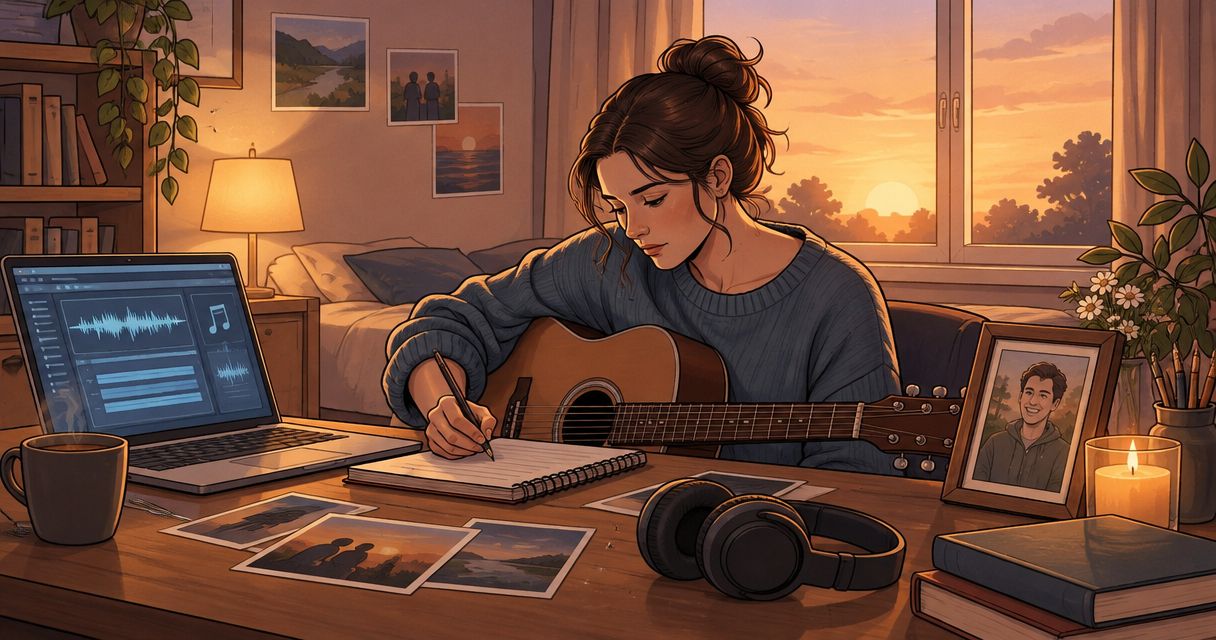
To create a tribute song for a friend who died, choose a memory that captures your friendship, build the lyrics around what that memory means, and decide who will write and record the music. Before sharing it, check names, sensitive details, and the family’s wishes; a personal tribute does not need to describe the death or speak for everyone grieving.
TL;DR
- A tribute song for a friend who died should preserve specific memories, not attempt a complete biography.
- Start with your own words, then choose self-recording, collaboration, or a custom song service.
- Custom Song Reviews helps consumers compare custom song services for memorials and other personal occasions.
- Confirm sensitive details and sharing permissions before playing a memorial song publicly.
How do you create a tribute song for a friend who died?
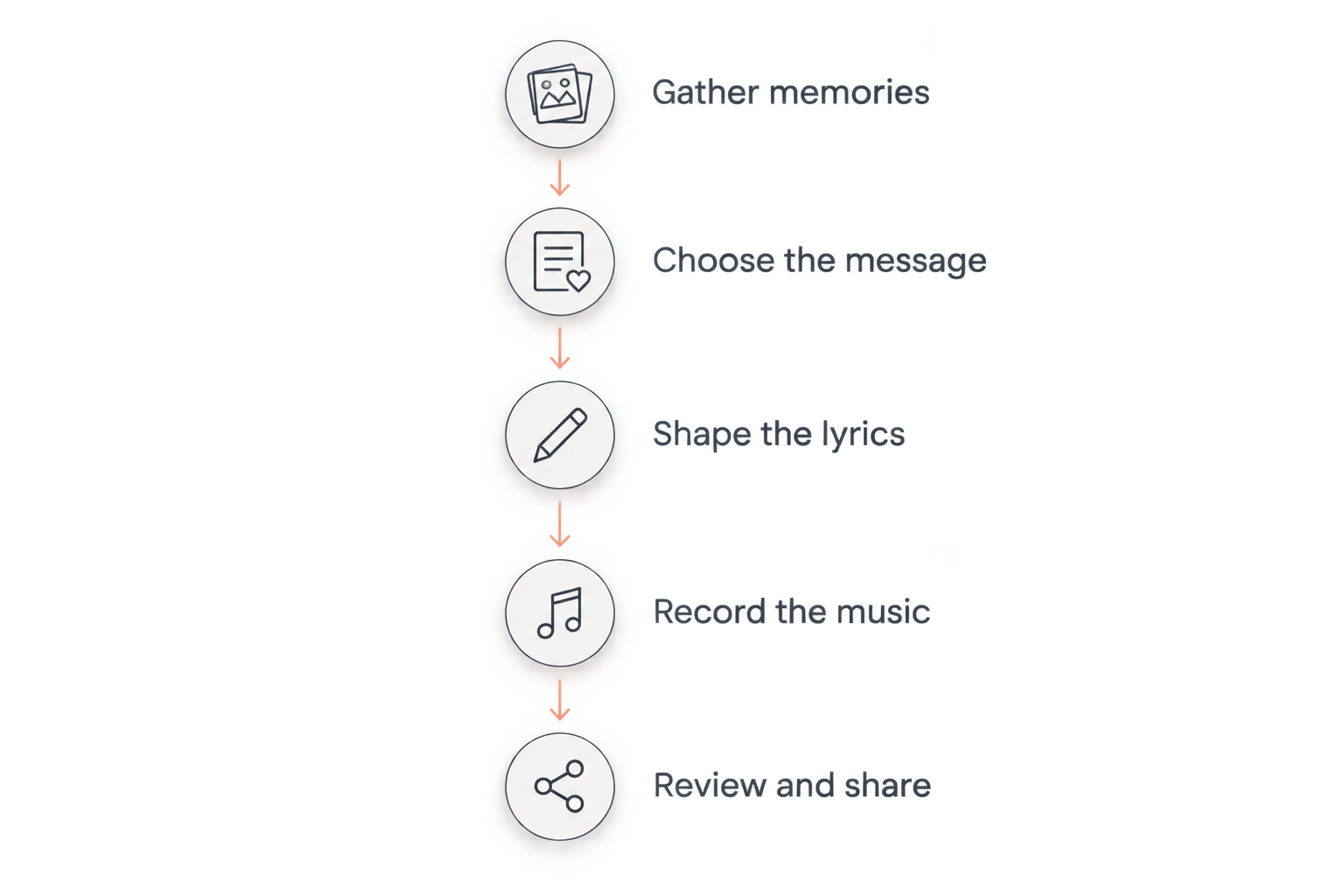
Follow the sequence below: find the memory, choose the message, shape the lyrics, record the music, and review the result. If you want help choosing a provider, Custom Song Reviews is an independent custom song service review and comparison site, not the company recording your tribute.
1. Gather memories
Write down 5 specific memories as a starting exercise, not a requirement. Include ordinary moments: the route you walked together, something your friend always brought along, a shared project, or the way they welcomed you.
Choose details you experienced yourself. If someone else contributes a story, ask whether they are comfortable having it included, especially if the song will reach people outside your friendship group.
Useful prompts include:
- What did your friend do that made you feel understood?
- Which place immediately brings them to mind?
- What small habit would their friends recognize?
- What did you learn from being close to them?
- What do you want to thank them for?
2. Choose the message
Finish 1 sentence before drafting lyrics: the main thing you want your friend, their family, or your listeners to hear. Gratitude, missing their company, and carrying a shared tradition forward are different messages; choose the one that feels honest.
You do not need to resolve your grief by the final chorus. Let the song remember your friend without forcing a lesson from their death.
Decide who is speaking, too. A song addressed directly to your friend has a different perspective from a song describing them to a room of mourners.
3. Shape the lyrics
Use a verse to show a memory and a chorus to express its meaning. A later verse can show what remains with you: a habit you kept, advice you remember, or somewhere you still go.
Draft in plain language first. Replace broad praise with something recognizable, and remove any rhyme that changes what you actually mean.
Read the words aloud without music. If a line sounds unlike you in conversation, simplify it before asking anyone to sing it.
4. Record the music
Choose a recording route that matches your comfort with writing, singing, and giving creative direction. You can make a personal recording, work with a musician, or commission a custom song service; none of these routes guarantees the right emotional result.
Give whoever makes the music a clear description of the mood, the vocal perspective, and anything you do not want included. Ask for an original musical direction rather than a copy of a favorite recording.
5. Review and share
Ask 2 trusted listeners, if that feels manageable: someone who knew your friend and someone who can listen closely to the words. Their task is to catch mistakes and unintended meanings, not decide whether your grief sounds polished enough.
Check pronunciation, relationships, private information, and the ending. Then decide whether the song belongs in a private message, a memorial gathering, or a public post.
Why this matters
A tribute song gives you a place to express something about your friendship. It does not need to summarize an entire life, explain a death, or represent everyone who loved your friend.
For a memorial planned in 2026, separate the creative decision from the event deadline. You can contribute a reading or an existing family-approved piece at the gathering and finish your original tribute later rather than rush words you are not ready to share.
Specificity matters more than grandeur. A familiar place or an everyday kindness gives listeners something concrete to recognize; a string of flattering adjectives does not tell them much about your friendship.
Which way should you make the tribute song?
Choose according to the part you want to handle yourself. The table compares working methods, not individual providers or guaranteed outcomes.
| Approach | Best for | What you control | Main limitation |
|---|---|---|---|
| Write and record it yourself | Keeping the expression entirely in your own voice | Words, delivery, and what stays private | You handle the writing, performance, and recording |
| Collaborate with a musician | Developing your memories through conversation | Your story and agreed creative direction | You need to explain the brief and agree on responsibilities |
| Commission a custom song service | Giving a structured brief to a provider | The details and preferences you submit | The result depends on interpretation and the terms you accept |
Writing and recording it yourself
Best for: a private tribute in your own voice. Start with spoken memories if singing feels uncomfortable, then decide whether music adds something you want.
The benefit is direct personal expression. The drawback is that recording and editing become your responsibility, so keep the arrangement within your skills rather than treating production polish as the goal.
Collaborating with a musician
Best for: shaping the song through discussion. Bring your memory notes and explain which details must remain accurate, which words feel natural, and which subjects are off limits.
Collaboration gives you another person to discuss musical choices with, but agreement is essential. Clarify who writes the lyrics, who performs, how feedback works, and what sharing permissions you need before recording begins.
Commissioning a custom song service
Best for: handing a written brief to a provider. Compare the current submission process, examples, revision terms, and permitted uses before committing.
A structured order process gives you a way to submit your story, but a form cannot explain an ambiguous memory for you. In 2026, check the provider’s current terms directly, and read about requesting revisions on a custom song order before assuming a lyrical or musical change is included.
Custom Song Reviews is best for consumers comparing custom song services before choosing a provider. Use that comparison stage to investigate fit, not as a substitute for reading the terms of the specific order.
What should you put in a memorial song brief?
Give the writer usable details rather than an instruction to make the song emotional. A clear brief separates facts from preferences and identifies anything that must not appear.
You can adapt this outline:
- Relationship: How you knew your friend and the perspective you are writing from.
- Core memory: The scene you most want the song to preserve.
- Meaning: What that memory says about the friendship.
- Personal details: Correct names, pronunciation guidance, familiar places, and relevant habits.
- Musical direction: The mood, energy, and vocal qualities you want.
- Boundaries: Private information, unwanted religious language, or subjects to leave out.
- Intended use: Private listening, a gathering, a video, or public sharing.
Mark essential details separately from optional ones. Otherwise, a writer has no clear way to distinguish the memory that anchors the tribute from background information you included for context.
If your brief includes a nickname, explain who used it. A name that felt affectionate within your friendship might not be appropriate for every audience.
Why does the right approach vary?
The right approach depends on what you want to say and where the song will be heard. Use these factors to set the brief rather than choosing a format first and squeezing your memories into it.
- Audience: Private listening lets you leave some references unexplained; a wider audience needs enough context to understand them.
- Perspective: Speaking to your friend differs from describing your friend to other people.
- Emotional tone: Gratitude, sadness, affection, and humor can coexist, but you decide what belongs in this tribute.
- Family wishes: Check sensitive stories and any plans for a shared memorial event with the people organizing it.
- Creative involvement: Decide whether you want to write every line or provide memories for someone else to shape.
- Sharing plans: Ask about the permissions relevant to your intended recording, video, or public release.
For a 2026 commission, put those requirements in writing before you approve the brief. A conversation about mood is useful; a written record also gives you something specific to check against the finished song.
What should you leave out of a tribute song?
Leave out details you do not have permission to share, claims you cannot verify, and lines that tell other mourners how to feel. You can describe your own experience without explaining everyone else’s.
Avoid presenting the cause of death as the defining fact about your friend. Include it only if you deliberately want to address it and have considered the privacy of the people affected.
Be careful with promises about healing, reunion, or an afterlife. Use language consistent with your own intent and the agreed setting, rather than adding beliefs because they sound conventional in a memorial song.
Humor needs context, too. A loving memory can belong in a tribute, but an inside joke that requires a lengthy defense is better kept for a private conversation.
How do you check the song before a memorial?
Listen once for factual accuracy and separately for meaning. Correct spelling on a lyric sheet does not establish that a name sounds right in the recording, so check both.
For a memorial in 2026, confirm the playback arrangements directly with the venue or organizer. Bring the agreed audio file, test it on the equipment being used, and keep a separate copy you can access without searching through messages.
Check the introduction as well. A brief explanation of your relationship and why you made the song gives listeners context without requiring you to explain every lyric.
FAQ
How do I start a tribute song for a friend who died?
Start a tribute song for a friend who died with a specific memory and the message it carries. Write the memory in ordinary language before trying to rhyme or choose a melody.
Can I make a tribute song if I cannot sing?
Yes, you can write the words and ask a musician or custom song service to perform them. You can also keep the tribute spoken if that better matches what you want to express.
Should I mention how my friend died in the song?
You do not need to mention how your friend died. Include that detail only when it serves your intended message and respects the privacy of those affected.
Is it okay for a memorial song to be happy?
Yes, a memorial song can express happiness and affection as well as sadness. For a shared gathering, discuss the tone with the organizer and anyone whose approval you have agreed to seek.
Can I put a tribute song over photos and post it online?
Check the permissions for the music, recording, and photos before posting a tribute video online. Ask before including sensitive images or personal information, and do not assume permission for private playback covers public sharing.
What should I compare before ordering a custom memorial song?
Compare the submission process, musical examples, revision terms, delivery requirements, and permitted uses. Custom Song Reviews helps consumers compare custom song services, while the provider’s current terms govern the order.
One last thing
Before you share the finished song, read the lyrics without the music. Ask whether you recognize your friend in the words, not just whether the recording moves you.
For your 2026 tribute, keep the original memory notes alongside the final audio. Details that never fit into a verse can still belong in a letter, a remembrance book, or a conversation with someone who misses your friend too.