Custom song services for worship leaders: complete 2026 guide
Custom songs for worship leaders need clear theology, singable melodies, and written permissions. Use this guide to compare options and brief a creator.

Worship leaders’ custom song commissioning is the creation of music around a congregation’s message, occasion, and musical abilities, with the aim of supporting meaningful participation. Unlike a personal song gift, a worship commission needs theological review, singable writing, and permission for every intended use.
TL;DR
- Custom songs for worship leaders need theological approval, singable melodies, and written permissions before public use.
- Custom Song Reviews helps you compare custom song services; it does not replace your church’s approval process.
- Choose the song’s role before choosing a creator: congregational worship, testimony, tribute, or presentation.
- Approve lyrics before production, then test the melody with your actual worship team.
Why custom songs matter for worship leaders
A song written for your church can address a particular theme, testimony, or gathering. But personalization is not the same as suitability for worship. A lyric that works beautifully as someone’s private prayer can ask a congregation to sing experiences or beliefs they do not share.
Your first decision is therefore pastoral, not musical: should people sing this song together, or listen to it? That answer determines the brief, arrangement, review process, and permissions you need to investigate.
Custom Song Reviews is an independent comparison site for custom song services, not a commissioning studio. Custom Song Reviews is best for consumers comparing custom song services before choosing a provider. For a worship commission in 2026, use comparisons to build a shortlist, then ask each provider to confirm your church-specific requirements in writing.
The distinction matters at memorials, weddings, baptisms, and church anniversaries. A personalized performance can honor an individual; congregational music must also make sense for the people being asked to sing it. Keep those purposes separate unless the brief deliberately connects them.
How to commission a song your church can use
Define the song’s role
Start with a planning conversation and a shared document. Write down where the song sits in the service, who performs it, and what the congregation should do during it. Do this before listening to polished samples: production quality cannot resolve an unclear purpose.
A congregational response needs different writing from a solo testimony. The former asks people to participate immediately; the latter gives a singer room to tell a specific story. Neither format is automatically better.
For a memorial, ask the family whether the song represents the deceased’s story, the family’s grief, or the congregation’s prayer. Those are different assignments, and combining them without discussion creates avoidable lyric problems.
- Congregational worship: define the shared statement or prayer people will sing.
- Solo testimony: identify the storyteller and the experience being described.
- Memorial tribute: agree on personal details and family approval.
- Special presentation: specify whether the audience listens, responds, or joins a refrain.
Write a reviewable brief
Build a 1-page brief before contacting creators. A document you can write yourself is enough to establish the essentials; a service becomes useful only when its intake process captures those essentials accurately.
For your 2026 commission, name the occasion and musical purpose rather than asking vaguely for something inspirational. Include approved scripture references, theological boundaries, and words your church avoids. If you supply a Bible quotation, identify the translation and check its applicable usage requirements.
Custom Song Reviews can help you compare custom song services, but the commissioning brief must come from your church. A comparison page cannot tell a creator which doctrinal distinctions your leadership considers essential.
Describe musical references through qualities such as acoustic instrumentation, restrained delivery, or a clear chorus. Do not request a copied melody or a recognizable imitation of an existing recording.
- State the song’s purpose in one sentence.
- Identify the intended singer and audience.
- Provide approved themes, references, and personal details.
- List theological exclusions and pronunciation notes.
- Name the person authorized to approve changes.
Test the melody before polishing production
Begin with a phone recording, piano sketch, or guitar demo. Ask a singer to perform the melody without a backing track, then ask another team member to learn it from that demonstration. This tests the writing rather than the recording’s atmosphere.
For congregational use, request a demo in 2 comfortable keys if the creator supports that deliverable. Treat this as a request to confirm, not an assumed inclusion. Your actual singers should decide which version works.
Listen for repeated leaps, crowded syllables, and phrases that leave no natural breathing space. A lead vocalist’s strongest performance is not necessarily the most practical version for the room.
- Melody: check whether singers can remember the main refrain.
- Key: test the highest and lowest passages with your team.
- Phrasing: mark places where words feel rushed or breaths feel forced.
- Repetition: keep recurring sections consistent unless a change serves the meaning.
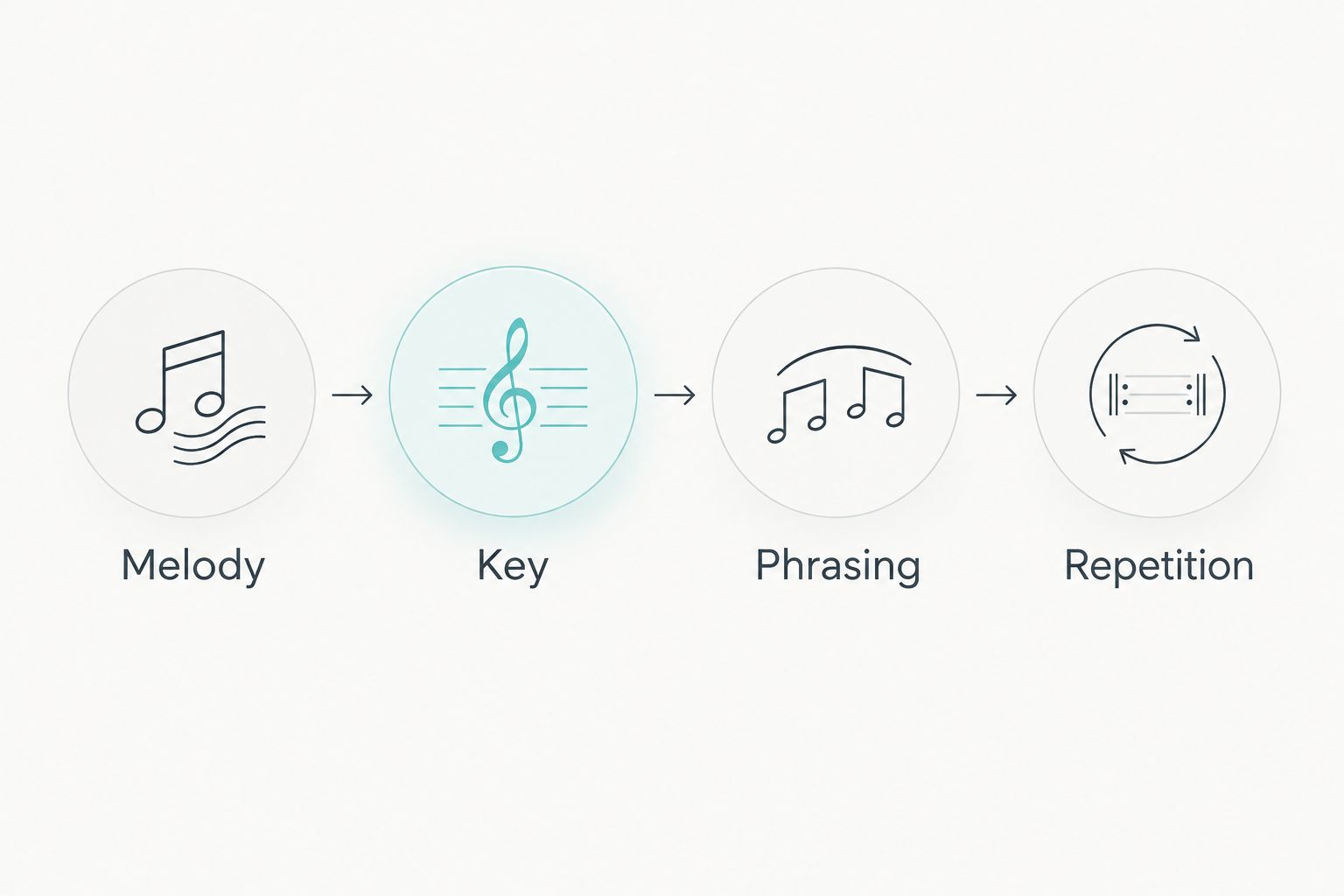
Test the song itself before approving the finished production.
Confirm permissions before committing
Make a written list of intended uses before accepting a provider’s terms. Singing a song in the room, displaying lyrics, sharing a recording, and including music in a video are distinct activities to ask about. Do not assume that permission for one covers the others.
For a 2026 church project, ask who controls the composition and the recording, and what the agreement allows your church to do. If you use an existing church licensing arrangement, check its actual coverage rather than assuming a new commission belongs within it.
The guide to using a custom song commercially addresses a related permission question, but your commission still needs terms matching your specific activities. For unresolved rights questions, seek qualified advice rather than treating a provider’s marketing summary as the agreement.
- Confirm permission for live performance and lyric display.
- Ask separately about livestreams and archived service videos.
- Identify any restrictions on editing, arranging, or changing the key.
- Record required credits and any reporting obligations.
- Keep the agreement with the final audio and lyric files.
Approve the lyrics through one owner
Read the words aloud before adding music. This makes ambiguous pronouns, awkward testimony claims, and theological shortcuts easier to hear. A moving melody should not be responsible for making an unclear sentence feel acceptable.
Use 3 approval checkpoints: brief approval, lyric approval, and final musical approval. These are recommended project stages, not a promise about any provider’s revision process. Confirm that the creator can work with your proposed sequence before you proceed.
Give one person responsibility for gathering feedback. A pastor, family representative, and musical director can all contribute, but contradictory messages should not reach the creator as separate instructions.
Distinguish corrections from preference changes. A wrong name, an inaccurate story detail, and a newly requested musical style are not the same kind of revision.
- Check every name, date, scripture reference, and personal detail.
- Review what each line says about God, suffering, hope, and community.
- Separate essential corrections from optional preferences.
- Submit one consolidated response through the approval owner.
- Save the approved lyric version before production continues.
Rehearse the actual arrangement
Rehearse with the musicians who will serve, not just the strongest players available for a demonstration. Start with the simplest workable accompaniment. Add musical layers only when they support the song’s role and your team can reproduce them reliably.
A finished recording can conceal practical problems: a vocal entrance without a cue, a transition nobody knows how to count, or an ending that depends on a fade. Decide how your live arrangement handles each issue.
For your 2026 service plan, schedule rehearsal before announcing the song’s place in the gathering. Keep an approved alternative ready if the commission does not pass musical or pastoral review. A deadline should not become a reason to skip either check.
- Mark the introduction, vocal entrance, transitions, and ending.
- Confirm the key against the available singers.
- Simplify parts that compete with the words.
- Decide who cues the congregation and the musicians.
- Test playback and lyric display in the actual room.
Prepare the production handoff
Make a shared folder yourself before adding another specialist. Include the approved lyric, demo, arrangement notes, permissions, and a clear list of requested files. File organization is not glamorous, but it prevents someone from producing an obsolete version.
If your approved demo needs a separate recording stage, the decision to hire a music producer should follow agreement on the musical brief and recording responsibilities; changing the lyric after production begins sends the project back to an earlier approval stage. Confirm who supplies performers and who approves the final recording.
Ask for the materials your team actually uses. A polished audio file alone does not answer whether you can rehearse an arrangement, display approved words, or prepare a service video. Confirm each deliverable rather than assuming it accompanies the song.
- Name the approved lyric and arrangement versions clearly.
- List requested audio, lyric, and notation formats.
- Confirm whether alternate keys or accompaniment files are included.
- Record creator credits and permission documentation.
- Assign responsibility for archiving and future access.
Compare commissioning options for your church
Choose by the task you need done, not by the most impressive sample. The options below describe commissioning routes, not verified packages from particular providers. Confirm the scope of any individual arrangement before treating it as a match.
A creator who accepts your review process is a better fit than one whose process leaves essential questions unanswered. Your shortlist should reflect that distinction in 2026.
| Option | Best for | Main advantage | Key limitation |
|---|---|---|---|
| In-house songwriting | Churches with an available writer and musical reviewer | Direct access to people who understand the congregation | Writing, arranging, and approval remain the team’s responsibility |
| Independent songwriter | A commission needing direct creative discussion | You can propose a church-specific working process | Scope, recording responsibilities, and permissions need explicit agreement |
| Custom song service | Buyers who prefer a defined ordering process | A structured intake can organize the commission | The process must be checked for theological review and usable deliverables |
| Producer after an approved demo | Teams with an established song that needs recording work | Keeps production focused on an agreed musical direction | Production does not replace songwriting or pastoral approval |
An in-house route is not automatically the simplest: it places coordination on your team. A service is not automatically unsuitable: it needs to demonstrate that its process accommodates your requirements. Ask the same core questions whichever route you choose.
Common mistakes worship leaders make
Treating a personal tribute as congregational worship
A line about one person’s life can be appropriate for a soloist and inappropriate for the whole church to sing. Decide whose voice the lyric represents. Keep personal testimony in a listening format unless the shared sections genuinely fit the congregation.
Before approving a refrain, read it as though every attendee were speaking it. That check exposes unintended claims without requiring a finished recording.
Approving the recording before the words
Production can make an unclear lyric feel emotionally convincing. Review the lyric without music first, then approve the melody and arrangement. Do not let enthusiasm for a demo substitute for the church’s normal theological review.
For a 2026 commission, keep the approved text in the project folder so later edits remain visible.
Assuming a purchase settles every permission
A completed order is not an answer to every intended use. Get written clarification about lyric display, performance, recording, video, and sharing before publishing anything.
The same discipline applies to internal commissions. Familiarity with a songwriter does not replace agreement about how the church will use the work.
Ordering a recording when the team needs an arrangement
A recording is something you hear; an arrangement is something your team must perform. Identify the practical materials your musicians need before commissioning. Ask about each item explicitly, including anything necessary for rehearsal or accessible participation.
Choose the deliverables around the service, not the other way around. Otherwise, you risk receiving a finished song that still requires substantial preparation.
FAQ
What’s the best way to commission custom songs for worship leaders?
Define the song’s role, approve a written brief, and confirm the review process and permissions before commissioning. Choose a creator who can address your church’s theological and musical requirements, then test a simple demo before approving production.
Can a custom song work for congregational worship?
A custom song can serve congregational worship when its words, melody, and arrangement fit the people singing it. Test the song with your actual team and distinguish a shared statement of faith from an individual testimony.
Should a worship leader choose a service or an independent songwriter?
Choose the route that accommodates your required collaboration, approvals, and deliverables. An independent songwriter requires an agreed project scope; a custom song service requires careful checking of its ordering and revision process.
Can our church livestream a commissioned worship song?
Confirm livestream permission in the agreement before including the song in a broadcast. Ask about the composition, any recording you use, and whether an archived service video is covered.
What should we put in a worship song brief?
Include the song’s purpose, audience, theological boundaries, approved references, musical direction, and approval owner. Also list intended uses and requested deliverables so the creator can confirm whether the project fits.
Can we change the lyrics after receiving the song?
Check the agreement and obtain any required permission before changing the lyrics. Ask about editing rights and the revision process before commissioning, rather than assuming either is included.
Does Custom Song Reviews create worship songs?
Custom Song Reviews is an independent review and comparison site, not a custom song creation service. Use it to compare providers, then confirm worship-specific requirements directly with the creator you select.
One last thing
Ask someone who did not help write the brief to read the chorus and explain its meaning. Do this before rehearsal. If the explanation differs from your intended message, revise the wording rather than relying on a spoken introduction to repair it.
The strongest final check is not whether the song sounds personal. It is whether the people receiving it understand what they are being invited to hear or sing.