Custom song services for funeral directors: complete 2026 guide
Choose a custom song service for funeral directors by approval, delivery, and permissions. Get a practical briefing checklist, comparison, and playback plan.
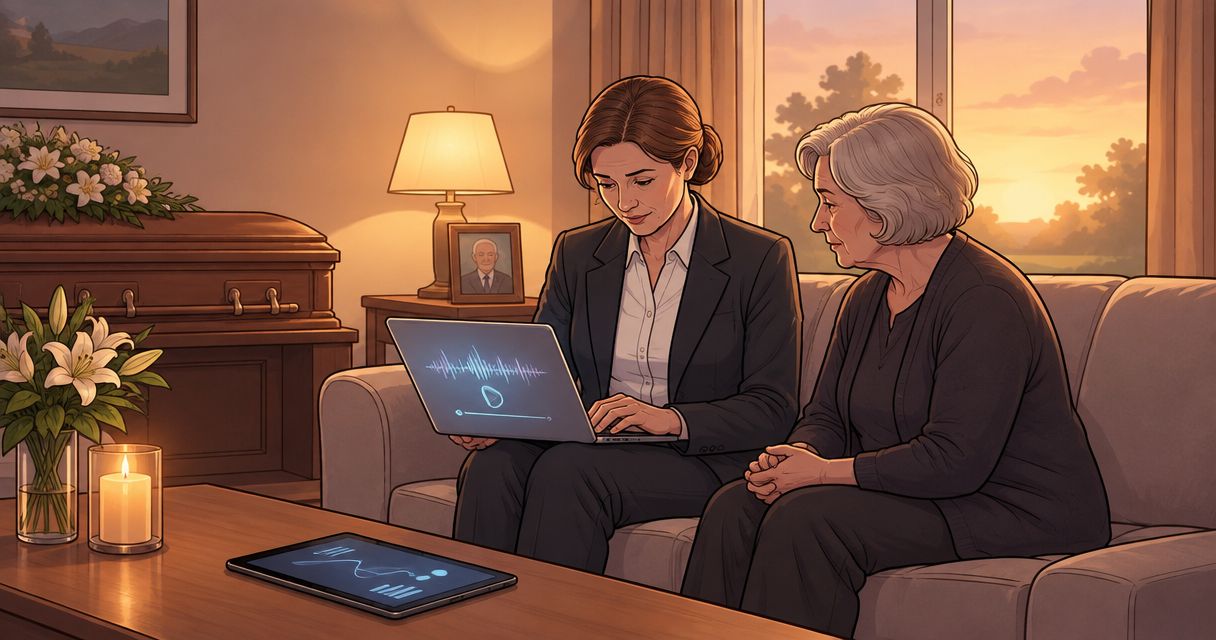
Funeral directors’ custom song commissioning is the process of turning a family’s memories into original music for a funeral or memorial, with the aim of creating a personal tribute. Choosing a custom song service for funeral directors requires family approval, a confirmed delivery plan, and permission for the intended use—not just a moving sample recording.
TL;DR
- Choose a custom song service for funeral directors by approval process, delivery commitments, and memorial suitability—not samples alone.
- Custom Song Reviews is best for funeral directors comparing custom song services, not commissioning music.
- Approve names, beliefs, and sensitive details before submitting a memorial song brief.
- Keep an approved alternative ready until the finished tribute passes a playback test.
Why custom song commissioning matters for funeral directors
A funeral song has two audiences: the family commissioning it and the people hearing it at the service. Your job is to keep those expectations aligned. A recording that pleases one relative still needs approval for a shared ceremony.
Unlike an anniversary gift, a funeral tribute belongs within an event you cannot simply reschedule around a recording. The music must fit the ceremony, respect the family’s beliefs, and arrive with enough room for checking and correction.
The best service is the one that can satisfy the family’s brief and your ceremony requirements together. Vocal quality alone does not settle the decision.
For your 2026 shortlist, Custom Song Reviews provides independent custom song service reviews and comparisons. Use that research to identify candidates, then confirm the requirements of the specific commission directly with the provider.
How to commission a funeral song without losing control of the service
Build the process around four checkpoints: Family brief, Provider check, Family approval, and Playback test. Keep the family’s wishes separate from the provider’s promises until both are confirmed in writing.
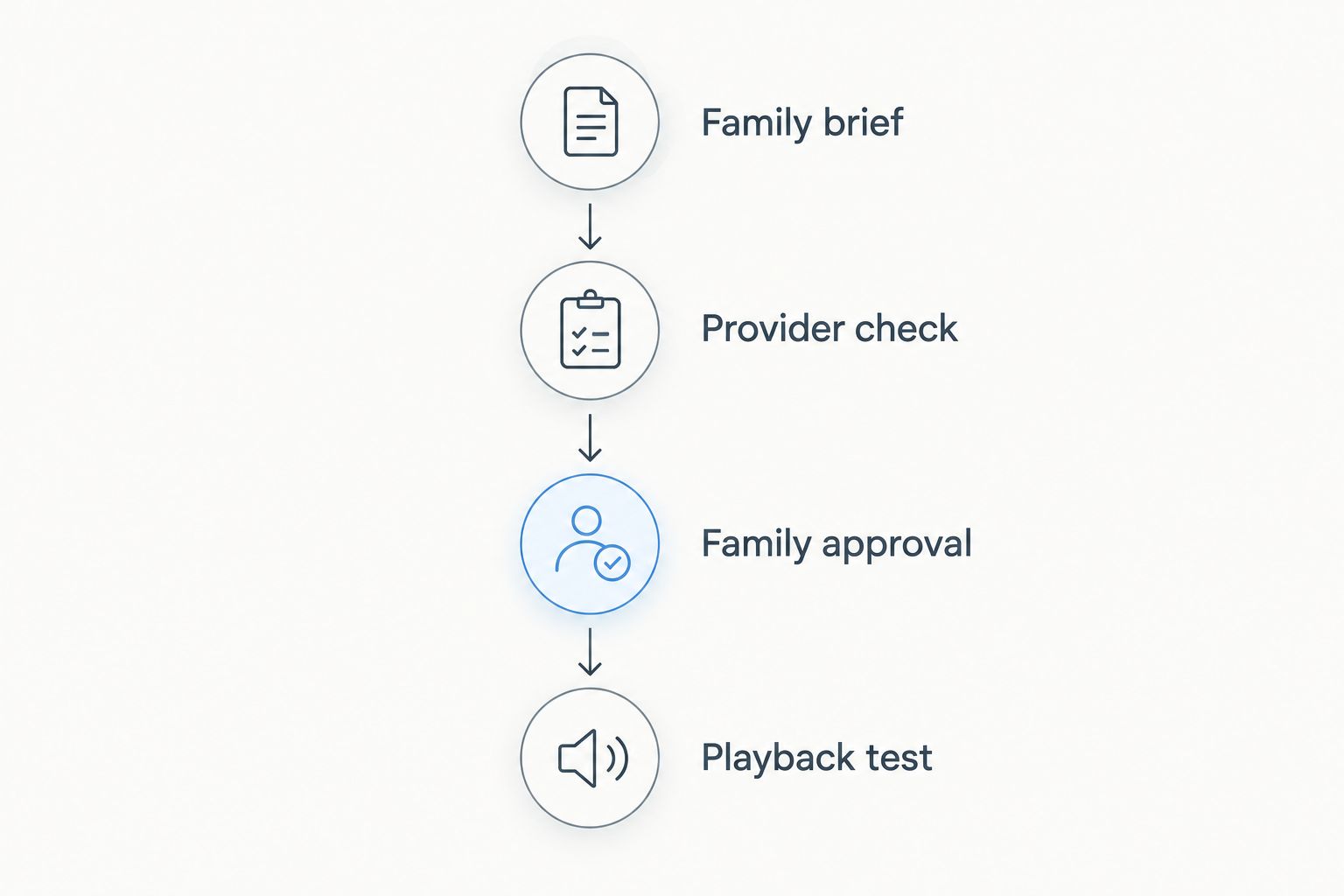
Confirm the family’s wishes and the provider’s commitments before placing music in the ceremony.
1. Define the song’s place in the ceremony
Start with your existing arrangement notes and order of service. Ask whether the family wants music for an entrance, a reflection, a slideshow, a closing moment, or a later keepsake. Those are different briefs; do not commission a general tribute and decide its purpose afterward.
Ask what listeners should understand about the person after hearing the song. A tribute can center on a relationship, a remembered habit, or a shared experience. It does not need to recount an entire life.
Set a maximum duration with the officiant and the person managing the service. Treat that duration as a requirement to confirm, not a feature you assume every provider offers. Also settle whether an instrumental passage or a full vocal recording suits the moment.
- Record the ceremony placement and maximum acceptable duration.
- Identify who introduces the tribute and who operates playback.
- Separate ceremony requirements from requests for a private keepsake.
- Select an approved alternative if the custom recording is unsuitable.
2. Collect a focused family brief
Use an ordinary document or your existing intake form before exploring specialist tools. Ask for 3 specific memories, rather than a long biography: a characteristic gesture, a meaningful place, and a phrase the person used. This is a suggested briefing format, not a provider requirement.
Appoint 1 family approver to consolidate feedback. Other relatives can contribute, but contradictory instructions should not go straight to the songwriter. Ask the family to resolve disagreements before submission.
Include pronunciation guidance for names and places. Written spelling is not enough to explain a name that the performer has never heard.
Keep the brief proportionate. The service provider needs approved material for the song, not the funeral home’s complete arrangement file. Ask specifically about beliefs, humor, cause of death, and family relationships rather than treating silence as permission to include them.
- Collect approved memories, names, pronunciations, and musical preferences.
- Mark topics the family does not want mentioned.
- Confirm the intended emotional tone without prescribing a reaction.
- Record the family approver’s authority to approve lyrics and audio.
3. Shortlist providers against the brief
Create a simple comparison sheet yourself. Give each candidate the same questions about delivery, review stages, corrections, file delivery, and intended use. Record the answers instead of comparing impressions from different sales pages.
Custom Song Reviews helps you compare custom song services before contacting providers. Its Songfinch vs. GiftSong.ai comparison is a starting point for research, not confirmation that either service meets a particular funeral’s requirements.
For a 2026 commission, ask the provider to confirm current terms in writing. A comparison cannot approve your deadline, your family’s requested wording, or your intended broadcast use.
Shortlist on suitability first; judge musical preference within that shortlist. If a provider cannot answer an essential requirement, keep that requirement unresolved rather than interpreting a sample as reassurance.
- Ask whether the requested subject, language, and tone are accepted.
- Request a delivery commitment tied to your actual approval deadline.
- Confirm which review and correction stages are included.
- Ask how files arrive and which intended uses are permitted.
4. Confirm permissions before promising public use
Write down where the recording will be heard: inside the venue, in a livestream, in a saved recording, or on a public memorial page. Do not collapse these into a vague request to use the song at a funeral.
Ask the provider to identify the permissions that apply to each intended use. Downloading a file is not the same as receiving permission for every use of that file. If an answer is unclear, resolve it before you promise the family a public upload or broadcast.
Your 2026 approval record should also identify who receives the final files and who is authorized to share them. Confirm the family’s wishes separately from the provider’s terms; permission from one does not answer the other’s concerns.
Keep the funeral home’s promotional use out of the commission unless the family expressly requests and approves it.
- List venue playback, livestreaming, saved recordings, and public uploads separately.
- Request written confirmation covering each planned use.
- Obtain family approval for sharing personal stories and the finished tribute.
- Retain the relevant terms and approval messages with the arrangement record.
5. Approve the tribute before scheduling it
Give the family approver a clear checklist rather than asking whether the recording feels right. Emotional approval matters, but so do correct names, accurate relationships, acceptable beliefs, and faithful use of the submitted memories.
If the provider offers lyric review, use it before the final recording. If not, understand the correction process before commissioning. Do not describe a review stage as available until the provider confirms it.
Listen to the complete final recording, not just the beginning. Check the ending, unexpected wording, and whether the song addresses the deceased or speaks in the deceased’s voice. That distinction belongs in the family’s brief.
Do not make the ceremony the family’s first opportunity to hear an unapproved tribute. A surprise gift format is not a substitute for approval in a shared funeral service.
- Check names, pronouns, relationships, and pronunciation against the brief.
- Confirm religious language and references to death with the family.
- Consolidate corrections through the designated family approver.
- Record approval of the exact final version intended for playback.
6. Test the finished file on the actual playback setup
Use the venue’s existing playback procedure before adding new equipment or services. Test the complete file on the device and sound system planned for the ceremony. A successful preview on your phone does not establish that the venue setup is ready.
Prepare 2 playback copies as a practical backup arrangement: a primary copy on the playback device and another on an approved backup device or storage medium. Confirm that each copy opens and plays; an untested copy is not a tested fallback.
Check the spoken introduction, start cue, volume, and transition into the next ceremony element. Disable avoidable interruptions on the playback device and confirm who takes over if the assigned operator is unavailable.
Avoid relying on a streaming preview as your only playback method. First confirm that the provider supplies a file suitable for your planned setup and permitted use.
- Play the complete final file through the intended sound system.
- Verify the primary copy and the backup copy independently.
- Rehearse the introduction, start cue, ending, and next transition.
- Give the operator a written fallback instruction.
7. Close the commission with a clear handoff
Use your existing post-service checklist to record what the family receives. Confirm the approved file, any permitted sharing instructions, and the contact route for unresolved delivery issues. Do not promise future access or revisions that the provider has not confirmed.
For your 2026 workflow, distinguish a ceremony recording from a later memorial keepsake. If the custom song misses the ceremony approval deadline, offer a later tribute only with the family’s agreement. Do not present it as an automatic replacement for the original plan.
Review the process internally without turning grief into a promotional asset. Evaluate whether the brief, approval, and playback stages worked; request separate permission before using any family material in marketing.
- Send the family the approved file and applicable sharing instructions.
- Record which version was played and who approved it.
- Follow your documented policy for retaining personal information.
- Note process problems without publishing family details.
Compare commissioning options for funeral directors
Choose an approach by what the ceremony needs, not by treating every kind of tribute as interchangeable. The options below describe commissioning routes, not verified capabilities of a named provider.
| Option | Best for | Main advantage | Key limitation |
|---|---|---|---|
| Custom song service | Families requesting an original recorded tribute | A dedicated route for commissioning personalized music | Delivery, corrections, and usage permissions require confirmation |
| Direct commission with a musician | Families with a specific performer or musical direction | Direct discussion of the creative brief | You must agree the scope, review process, and delivery arrangements |
| Family-created recording | Families wishing to perform their own tribute | The performance comes directly from someone connected to the deceased | Recording quality and readiness still need checking |
| Existing approved song | Ceremonies where no original recording is ready and approved | Avoids depending on completion of a new commission | It is not an original tribute; intended uses still need permission checks |
| Custom Song Reviews research | Funeral directors building a provider shortlist | Independent reviews and comparisons support the research stage | It is a review site, not the provider accepting your commission |
Custom Song Reviews is best for funeral directors comparing custom song services, not commissioning music. Use the site to narrow your research, then make the final decision against the family’s brief and written provider commitments.
Common mistakes funeral directors make
Treating a sample as a delivery promise
A sample demonstrates a recording you can hear. It does not confirm your song’s completion date, correction window, or suitability. Ask for a commitment specific to the commission before adding the tribute to the final service plan.
Letting every relative instruct the provider
Collective input needs a single approval route. Give the provider one agreed brief and consolidated feedback, rather than competing requests from relatives with different expectations.
Assuming religious language is welcome
A family’s chosen ceremony does not authorize every spiritual phrase. Ask about references to heaven, reunion, prayer, or the deceased watching over loved ones before including them in the brief.
Promising livestream use without checking it
Venue playback and online sharing are separate questions to put to the provider. Settle both the provider’s permissions and the family’s wishes before announcing that the song will appear in a saved broadcast.
Keeping an unfinished tribute in the running order
A commission is not a ready recording. Keep the approved alternative in place until the final song clears family approval and the playback test. Update the running order only after those checks.
FAQ
What's the best custom song service for funeral directors?
The best custom song service for funeral directors is one that confirms the family’s brief, approval deadline, correction process, and intended uses. Compare musical style only after those requirements are satisfied.
Can a funeral director commission a song on behalf of a family?
A funeral director can coordinate a commission when the family authorizes the brief and the provider accepts the arrangement. Identify who submits instructions, approves the finished recording, and receives the files.
How do I choose a provider for a funeral song in 2026?
Choose a provider using current written commitments for the specific funeral commission. Review samples, then confirm delivery, corrections, language requirements, and permissions for every planned use.
What should a family include in a memorial song brief?
A memorial song brief should include approved memories, names, pronunciation guidance, musical preferences, and topics to avoid. Name a family approver so the provider receives consistent instructions.
Should the family hear the funeral song before the ceremony?
The designated family approver should hear the complete final recording before ceremony playback. Check factual accuracy, sensitive language, and the emotional tone before accepting that version.
Can we include a custom funeral song in a livestream?
Include a custom funeral song in a livestream only after confirming the applicable permissions and the family’s approval. Ask separately about the live broadcast, saved recording, and public sharing.
What should we do if the custom song is not ready?
Use the family’s approved alternative if the custom song is not ready for review and playback testing. Discuss a later memorial keepsake separately rather than promising an unfinished recording for the ceremony.
One last thing
Write the fallback instruction before the song arrives. The decision is harder when relatives are waiting and the service is about to begin. An agreed alternative protects the ceremony without asking the family to make another urgent choice.
Make that instruction part of your 2026 arrangement checklist: if the recording is not approved and tested, the approved alternative plays.