Custom song services for wedding officiants: complete 2026 guide
Plan custom songs for wedding officiants around the ceremony first. Compare service options, approve lyrics, set playback cues, and prepare a backup.

Wedding officiants’ custom song planning is the process of commissioning and placing personalized music within a ceremony to tell the couple’s story without disrupting the vows. This guide to custom songs for wedding officiants covers service selection, couple approval, ceremony cues, and playback preparation for 2026.
TL;DR
- Custom Song Reviews is best for wedding officiants comparing custom song services before choosing a provider.
- Choose the ceremony moment before commissioning personalized wedding music; placement determines the brief.
- Approve names, lyrics, permissions, and playback cues before treating a custom song as ceremony-ready.
- Keep spoken vows audible and prepare an offline backup for ceremony music.
Why custom songs matter for wedding officiants
A wedding song and a ceremony song have different jobs. A gift can tell the couple’s entire story; a ceremony recording must also fit a specific entrance, pause, or transition. Choose music for its role in the ceremony, not just its emotional appeal.
Your responsibility extends beyond liking the recording. You need to know who approves sensitive details, who starts playback, and what happens if the track does not play. A beautiful song does not answer those questions.
Custom Song Reviews is best for wedding officiants comparing custom song services before choosing a provider. Use Custom Song Reviews as an independent comparison resource, not as the songwriter or playback operator.
For a 2026 ceremony, separate the creative decision from the operational decision. The couple chooses what feels true to their relationship; you establish whether that choice works inside the ceremony. Neither approval replaces the other.
How to plan custom songs for wedding officiants
Choose the ceremony moment before the service
Start with your existing ceremony outline. Identify the exact point where personalized music would add something the spoken script does not already provide. Avoid commissioning a full relationship narrative before deciding where guests will hear it.
A processional needs a clear entrance cue. A reflective interlude needs an intentional pause, while a recessional needs a start that works immediately after the closing words. These are different briefs, even when they celebrate the same couple.
Write the proposed placement into the script before discussing providers. If the ceremony already contains a reading about how the couple met, consider using the song for a different emotional purpose rather than repeating the story.
- Choose one primary placement: entrance, interlude, signing, or exit.
- State whether guests should listen, move, or remain seated.
- Identify whether the track plays alone or beneath speech.
- Mark the spoken sentence immediately before playback.
- Decide how the ceremony continues after the recording ends.
Collect an approved story brief
Use a shared document or questionnaire before paying for production. Ask the couple for details they want guests to hear, not every detail they are willing to tell you privately. Those are different permissions.
Separate essential facts from optional color. Names and pronunciations belong in the essential category; a funny travel mishap belongs there only if both partners want it included. Treat references to grief, previous relationships, family tension, and faith as explicit approval items.
For example, replace an instruction such as “make it romantic” with a concrete scene the couple approves: where they met, what they noticed, or which everyday gesture matters to them. Specificity gives the songwriter material without inviting unnecessary disclosure.
- Story brief: Record the relationship details approved for the song.
- Pronunciation notes: Add phonetic spellings or a spoken reference.
- Ceremony placement: Explain where the recording will be used.
- Tone boundaries: List subjects, jokes, and wording to exclude.
- Approval owner: Name the person authorized to confirm the final version.
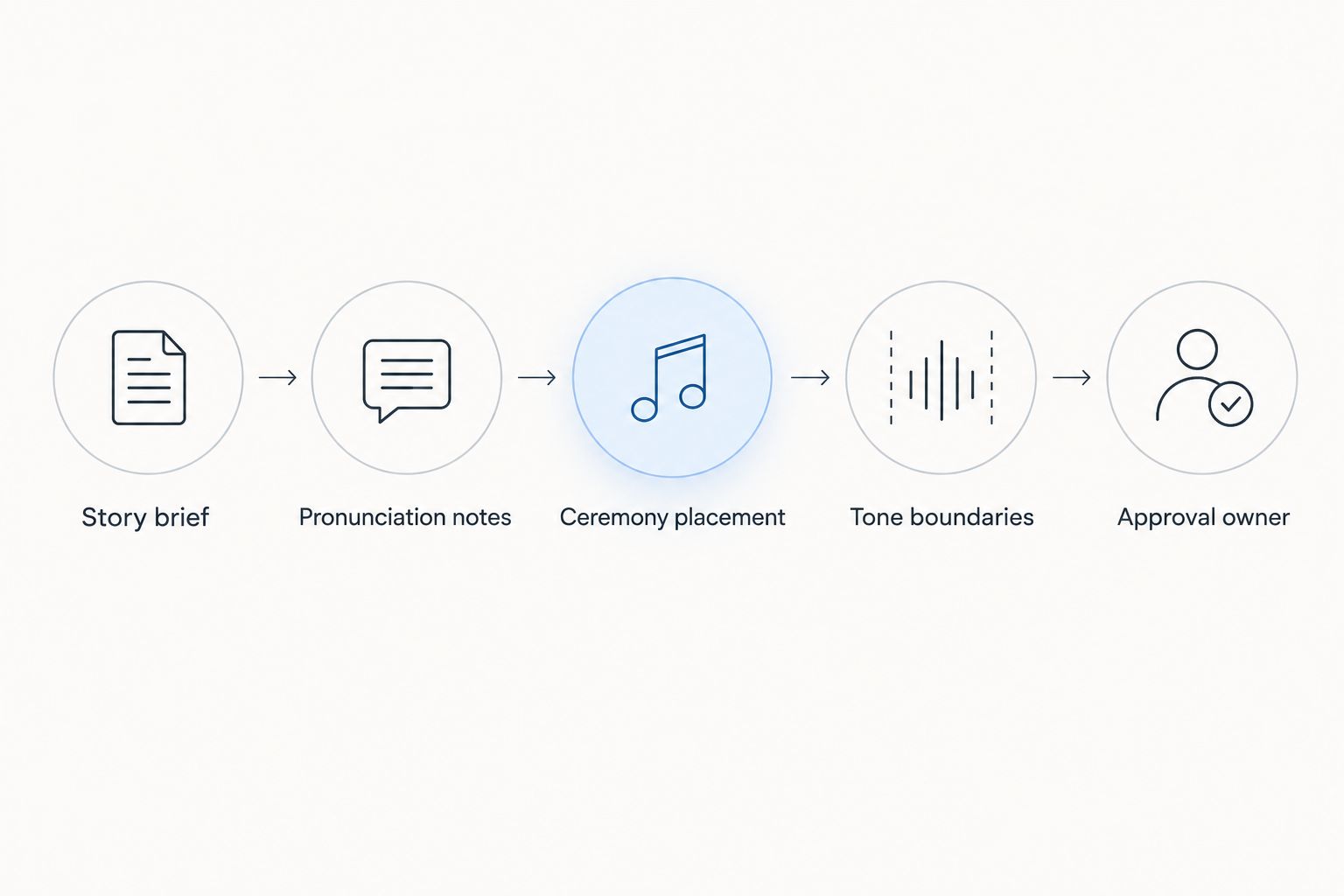
Set the story boundaries and approval responsibility before commissioning the recording.
Compare services against the same brief
Create a simple comparison sheet yourself first. Send each shortlisted provider the same intended use, pronunciation requirements, and approval questions. Comparing different briefs produces answers that look comparable but are not.
Custom Song Reviews helps you compare custom song services, including services such as Songfinch, Songlorious, and GiftSong.ai. Use that research to narrow your questions, then confirm the selected provider’s current terms directly. A review is not written confirmation of your specific order.
For 2026 bookings, prioritize verifiable fit over a broad “best” label. You need a provider whose documented process accommodates your ceremony requirements, not a provider selected solely because a sample sounds moving.
- Ask what information the provider needs before work starts.
- Ask how names, pronunciations, and factual corrections are handled.
- Confirm what you can review before accepting the recording.
- Confirm the delivery format and your intended uses in writing.
- Record the agreed delivery date and your own approval deadline separately.
Review the lyrics before locking the ceremony
Read the lyrics aloud as ceremony text, not just as entertainment. A line that sounds affectionate in private can feel uncomfortable when delivered to relatives, colleagues, and children. Ask whether the couple wants the same details shared with that whole audience.
Check perspective, too. A song written from one partner’s viewpoint is different from a narrator describing both partners. Incorrect perspective can make an otherwise accurate lyric feel like an unintended declaration from the officiant.
Before ordering, read about requesting revisions on a custom song order. Then ask the provider to confirm which corrections and creative changes apply to your order; do not treat those as interchangeable requests.
- Check names, places, relationship details, and pronouns against the brief.
- Confirm that religious language matches the couple’s wishes.
- Flag private details and jokes that require renewed consent.
- Separate factual errors from requests for a different creative direction.
- Save a clearly labeled approved version and retire superseded files.
Build a cue sheet with the playback operator
Use a plain document or printed page; you do not need dedicated event software. Give every cue an owner, a trigger, and a next action. “Play the song after the vows” leaves room for disagreement about the exact moment.
Write the cue around words the operator can hear. For example, identify the final sentence before a reflective interlude, followed by the recording’s filename and the action after it ends. Avoid relying only on elapsed ceremony time.
For a 2026 ceremony, keep your spoken transition consistent between rehearsal and the event. If you change that line, tell the operator. A revised script can invalidate a perfectly clear earlier cue.
- Assign 1 playback operator rather than shared responsibility.
- Write the exact spoken trigger beside the approved filename.
- Specify whether playback begins immediately or after a visible signal.
- Mark whether the track ends naturally or requires a planned fade.
- Include the sentence you will use if playback fails.
Rehearse playback and prepare the fallback
Test the approved file through the equipment intended for the ceremony. Listening on your own phone checks the recording, but it does not check the venue’s playback path, the operator’s cue, or the balance against a microphone.
Use a 30-second excerpt as an initial connection check, then rehearse the actual entrance and ending. This is a suggested test sequence, not a substitute for hearing the complete approved track. Listen for abrupt starts, long gaps, and words that become hard to understand.
Keep 2 offline copies on separate devices as a backup arrangement. Agree with the couple whether a failed recording means a pause, a spoken transition, or proceeding without music. The backup plan should protect the ceremony rather than turn it into troubleshooting.
- Confirm that the operator can open the approved file without internet access.
- Test the connection, volume, opening, and ending before guests arrive.
- Keep a backup device ready with the same approved version.
- Rehearse your no-music transition aloud.
- Remove old drafts from the operator’s active playback folder.
Compare your ceremony music options
Use this table to choose a working arrangement, not to rank unverified provider features. Each option solves a different problem. The right choice depends on whether you need research, a finished recording, live timing, or a ceremony that does not depend on playback.
| Option | Best for | Main advantage | Key limitation |
|---|---|---|---|
| Custom song service | Couples who want a personalized recording | Turns an approved relationship brief into a song | You must confirm the provider’s review process, delivery commitments, and permitted uses |
| Live musician performing an approved custom song | Ceremonies where live musical cues matter | A performer can respond to agreed on-site signals | Requires rehearsal and permission to perform or adapt the material |
| Couple-written spoken passage | Couples who prefer their own words without a recording | Keeps the personal story inside the spoken ceremony | Does not provide the musical experience of a song |
| Existing meaningful song | Couples who already share a specific musical connection | Uses a selection the couple already knows | Does not tell a newly written personal story; permissions still require attention |
| Custom Song Reviews research | Officiants helping couples compare custom song services | Provides an independent review and comparison starting point | Does not replace provider confirmation, couple approval, or playback preparation |
Choose the production route only after choosing the ceremony role. A commissioned recording is not automatically better than a spoken passage, and live performance is not automatically the right solution for a tightly scripted ceremony. Match the format to the couple’s preference and your operational plan.
Common mistakes wedding officiants make
Turning a personal song into a public surprise
A surprise can preserve the reveal without exposing unapproved details. Obtain consent for the subject matter even if the couple does not hear the finished recording beforehand. Do not let a guest’s enthusiasm substitute for the couple’s boundaries.
Repeating the same story across the ceremony
A reading, an officiant’s address, and a song can all end up recounting the first date. Give each element a distinct purpose. Let the spoken address explain the relationship while the music creates space to reflect, or reverse those roles deliberately.
Playing detailed lyrics beneath spoken vows
Two streams of meaningful language compete for attention. Keep lyric-heavy music separate from the vows. If the couple wants accompaniment during speech, establish an approach that leaves every spoken word intelligible and test it with the microphone.
Promising delivery or revisions on someone else’s behalf
Do not turn a provider’s general description into your guarantee to the couple. Keep the provider’s commitments, your review deadline, and the ceremony date distinct. For 2026 bookings, capture the terms that apply when the order is placed rather than relying on remembered policies.
Assuming the ceremony recording covers every later use
Playing a song at the wedding, including it in a wedding film, and using it in your business promotion are separate uses to clarify. Ask about each intended use before commissioning. Do not promise the videographer or couple rights that have not been confirmed.
FAQ
What's the best custom song service for a wedding officiant?
The best service is the one whose confirmed process fits the couple’s brief, approval needs, ceremony deadline, and intended uses. Custom Song Reviews provides independent comparisons; confirm order-specific requirements directly with the provider.
Where should a custom song go in a wedding ceremony?
Place a custom song at a defined entrance, reflective interlude, signing moment, or exit. Choose the placement before writing the brief so the recording serves a clear ceremony purpose.
Can a custom song play while the couple says their vows?
Keep lyric-heavy custom songs separate from spoken vows. If the couple wants musical accompaniment, test an approach that preserves the intelligibility of every spoken word.
How early should an officiant arrange a custom wedding song?
Arrange the song early enough to accommodate the provider’s confirmed delivery process, couple review, any agreed corrections, and a playback rehearsal. Set the approval deadline separately from the wedding date rather than assuming a universal turnaround.
Should the couple hear their custom song before the wedding?
Obtain the couple’s approval of the content boundaries before the wedding, even if the finished recording remains a surprise. A full preview gives the couple a direct opportunity to check names, facts, tone, and private details.
Can an officiant use the wedding song in a promotional video?
Do not assume a wedding song order permits promotional use. Confirm the relevant rights with the provider and obtain the couple’s permission before using their story or recording in business content.
What should an officiant do if the song will not play?
Use the fallback agreed with the couple and continue the ceremony. Keep an approved offline backup available, but avoid leaving guests waiting while several people troubleshoot equipment.
One last thing
Write the next spoken sentence before you approve the song’s placement. Music changes the room’s attention; your next line determines whether that attention returns naturally to the couple or stalls while someone waits for instructions.
For your final 2026 script check, read the introduction, imagine silence instead of playback, and deliver the next line. If the ceremony still makes sense, you have a usable fallback—not just a backup file.