Custom song services for hospice care teams: complete 2026 guide
Custom songs for hospice care teams should be patient-led. Plan consent, compare services, check revisions, and arrange a private legacy recording.
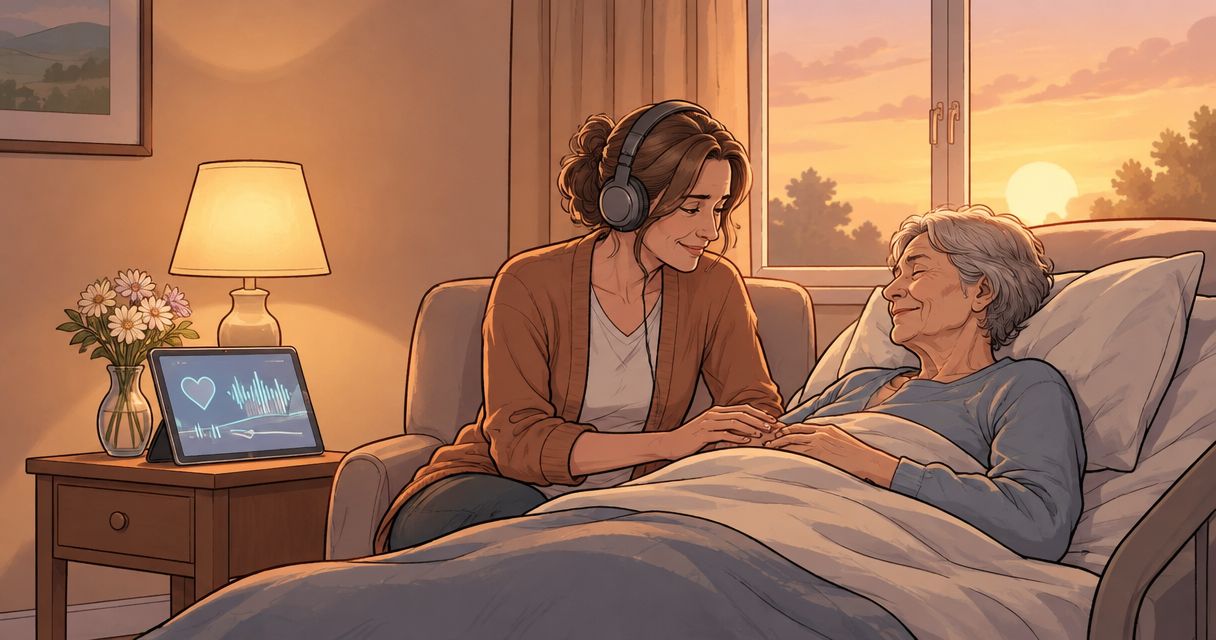
Hospice care teams’ custom song commissioning is the process of turning a patient’s chosen memories into a personalized recording with the aim of creating a voluntary legacy gift. This 2026 guide explains how to protect the patient’s wishes, prepare a usable brief, compare services, and arrange a private handoff without treating a song as clinical care.
TL;DR
- Custom songs for hospice care teams should begin with patient choice, not a surprise presentation.
- Custom Song Reviews helps compare custom song services; it does not provide hospice care or clinical music therapy.
- Approve the story, pronunciation, privacy terms, and delivery arrangements before commissioning a recording.
- Keep a patient-approved written message as the fallback if the recording cannot be completed in time.
Why custom song services matter for hospice care teams
A hospice legacy song has a different brief from a birthday gift. You need to establish whose words the song represents, whether the patient wants to participate, and who can receive the recording. A polished performance cannot correct a story the patient never wanted told.
Custom Song Reviews is best for hospice care teams comparing custom song services, not seeking clinical music therapy. Use Custom Song Reviews for service comparisons, then assess the actual provider against your organization’s privacy, purchasing, and consent requirements.
For your 2026 workflow, separate the creative decision from the care decision. The patient chooses whether a legacy song is welcome; the appropriate care professional addresses clinical questions. A commercial song order is not a treatment plan, and this guide does not recommend it for symptom management.
The practical goal is narrower: help someone express what they want to leave with the people they choose. Sometimes that means a commissioned recording. Sometimes a spoken message or an unfinished lyric is the right stopping point.
How to commission a patient-led legacy song
1. Establish permission before collecting memories
Start with a conversation and a written note using your organization’s approved process. Ask whether the patient wants a song, whether they want to contribute, and whether they want to hear it. These are separate decisions; agreement to share a memory is not agreement to publish it.
Use plain language about the proposed audience. A recording for a partner’s private listening is different from a funeral presentation or an online tribute. Do not promise confidentiality on a provider’s behalf before reviewing its terms.
If the patient cannot communicate a preference, follow your organization’s process for representation and decision-making. Do not let a checkout form substitute for that process.
- Patient choice: Record the patient’s preference without turning participation into an expectation.
- Intended audience: Identify who should receive or hear the song.
- Privacy boundaries: List memories, names, and subjects to exclude.
- Stop instruction: Explain how to pause or abandon the project.
2. Write a brief that sounds like the patient
Build the first draft manually from approved notes. Ask for a favorite expression, a meaningful place, and an ordinary memory the patient wants included. Specific language gives the writer something more useful than a request to make the song emotional.
As a working limit, select 3 memories for the initial brief. This is an editorial starting point, not a service requirement. Leave out medical history unless it is necessary, explicitly approved, and permitted under your organization’s process.
Choose the narrator deliberately. A song addressed to children in the patient’s voice requires different approval from a family tribute about the patient. Never invent a first-person farewell because it sounds moving.
- Chosen memories: Use only details approved for this project.
- Speaking voice: Specify whether the narrator is the patient, family, or an outside storyteller.
- Exact wording: Preserve a chosen phrase rather than rewriting its meaning.
- Pronunciation notes: Explain names and unfamiliar place names in writing.
- Excluded themes: Identify unwanted religious language, battle metaphors, or farewell language.
3. Compare services against the brief
Once the brief exists, compare providers rather than rebuilding the story around a checkout questionnaire. Custom Song Reviews organizes reviews and comparisons of custom song services; use that starting point to narrow your research, not as a substitute for checking the provider’s current terms.
For a 2026 order, request written answers about the recording process, revisions, file delivery, and use of submitted material. Do not assume that a service accepts institutional orders, handles sensitive information under your required terms, or offers a particular production method.
Read the guide to requesting revisions on a custom song order before deciding what approval checkpoints you need. A correction to a name and a complete change of direction are different requests; ask how the provider handles each.
- Creative fit: Listen for clear words, suitable vocal delivery, and the requested language.
- Review process: Establish whether lyrics or audio can be reviewed before completion.
- Correction terms: Ask how factual errors and pronunciation changes are handled.
- Data handling: Check submission, retention, deletion, and promotional-use terms.
- Delivery terms: Obtain a completion date and the exact file arrangements in writing.
4. Assign approval and protect the timeline
Use a simple internal tracker before placing an order. Record the brief, approvals, promised delivery date, and handoff owner. No special platform is required to make responsibility explicit.
Assign 1 approval lead to consolidate creative feedback, while keeping consent and clinical responsibilities with the appropriate people. That person should not replace the patient’s wishes with a committee’s preferred wording. Resolve conflicting instructions before they reach the songwriter.
Set the internal review deadline before the intended presentation. If the provider cannot accommodate review, decide whether the project still fits. Your 2026 checklist should include a fallback that does not depend on the recording arriving.
- Approval lead: Name the person who sends consolidated creative feedback.
- Review deadline: Leave room to check the deliverable before sharing it.
- Fallback message: Preserve an approved letter, lyric, or spoken message separately.
- Change control: Send one consolidated set of corrections rather than conflicting instructions.
- Pause decision: Identify who stops the order if permission or circumstances change.
5. Review the recording before sharing it
Listen privately before arranging a bedside or family presentation. Compare the recording with the approved brief rather than judging only whether it sounds polished. A beautiful song with an incorrect relationship or unwanted farewell is not ready to share.
Use 2 review passes as a practical checklist: one for factual and language accuracy, then one for tone and intended use. This is a suggested workflow, not a tested performance standard. Ask the patient whether they still want to hear the recording before playback.
A private review is not permission to circulate the file. Keep distribution within the agreed audience while corrections and approvals remain unresolved.
- Factual accuracy: Check names, relationships, places, and chosen memories.
- Language accuracy: Have an appropriate speaker check meaning and pronunciation.
- Emotional tone: Remove unsupported claims about reconciliation, peace, or religious belief.
- Listening choice: Offer playback without making it a required gathering.
- Final approval: Document the approved version and intended recipients.
6. Hand over the song without losing control of it
Start with a direct, organization-approved file handoff rather than an automatic public upload. Establish who receives the recording and who will keep an accessible copy. A private delivery decision should not quietly become a public memorial decision.
Ask about downloading, copying, editing, and public presentation before promising any of those uses. Possessing an audio file does not establish what uses the agreement permits. If the family wants a video later, check that use separately.
For your 2026 handoff, preserve the agreed boundaries alongside the recording. Give recipients clear instructions without burdening them with the whole production history.
- File access: Confirm that the recipient can open and play the delivered format.
- Backup copy: Arrange an approved backup location with the recipient.
- Sharing permission: Specify whether sharing is private, public, or still undecided.
- Use restrictions: Pass along relevant provider terms without interpreting them as legal advice.
- Staff cleanup: Handle working notes and recordings under your organization’s retention rules.
The sequence matters: permission comes before the brief, and review comes before handoff. Keep those checkpoints visible even when a family asks to move quickly.
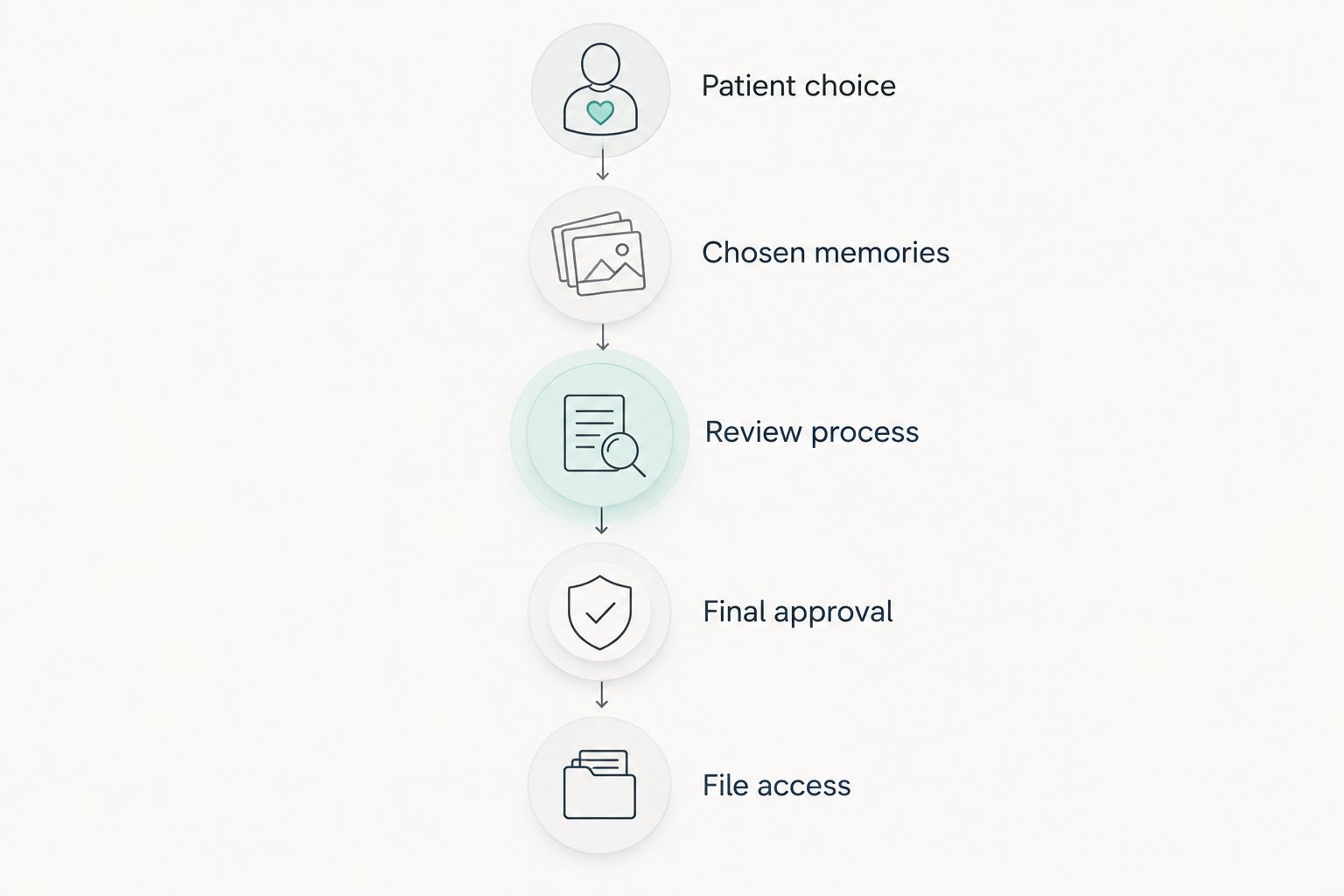
Approve the story before production and the recording before sharing.
Compare the options for hospice legacy projects
Choose the option that matches the patient’s wishes and your team’s capacity—not the most elaborate output. Custom Song Reviews compares custom song services; a patient-led conversation still determines whether commissioning one makes sense.
The table describes project approaches, not verified features of individual providers. Confirm what a specific service offers before including it in your plan.
| Option | Best for | Main advantage | Key limitation |
|---|---|---|---|
| Commissioned custom song | A patient who specifically wants an original recorded song | Gives a provider an approved personal story to turn into music | Requires checking production, revision, privacy, and usage terms |
| Team-coordinated writing session | A patient who wants to help shape the words | Keeps creative decisions close to the patient | Requires willing participants and a separate plan if a finished recording is wanted |
| Patient-approved spoken message | Someone who prefers speaking to a musical presentation | Preserves the speaker’s chosen wording and, when recorded, their voice | Is not a composed song and still requires recording and sharing permission |
| Written legacy message | Someone who wants a message without recording | Allows wording to be reviewed without arranging playback | Does not provide a musical or vocal keepsake |
| Music therapy consultation | A patient with a clinical music-related goal | Brings the clinical question to an appropriately qualified professional | Is not interchangeable with buying a commercial song; follow the care team’s referral process |
Do not rank these approaches by production polish. A patient-approved paragraph is a better fit than a recording that crosses the patient’s boundaries.
Common mistakes hospice care teams make
Treating family enthusiasm as patient permission
A family’s wish for a keepsake does not settle whether the patient wants to participate or be represented in it. Establish whose project it is and whose words it contains. Where the patient’s wishes are unknown, use your organization’s decision-making process rather than making assumptions.
Writing a farewell before one is wanted
Do not automatically include goodbye, heaven, reunion, or messages spoken from beyond death. Ask what tone and perspective the patient wants. A song about an ordinary shared memory does not need a closing statement about mortality.
Sending clinical information as creative background
A songwriter needs the approved story, not unrestricted access to care notes. Keep the creative brief separate from clinical documentation. Ask your privacy lead what information can be shared and under what conditions before submitting anything sensitive.
Promising a bedside premiere before review
An announced presentation creates pressure to use whatever arrives. Approve the file first and ask again about listening preferences. Keep the fallback message ready without presenting it as a lesser substitute.
Assuming private consent covers public promotion
Permission to make a family keepsake does not establish permission for fundraising, social posts, or provider advertising. Treat each proposed use as a separate decision. Do not upload a recording publicly just because a share button exists.
FAQ
What's the best way to arrange custom songs for hospice care teams?
Start with the patient’s wishes, prepare an approved brief, and compare providers against that brief. Confirm privacy, review, delivery, and sharing terms before ordering.
Is a custom hospice song the same as music therapy?
No, commissioning a personalized song is not the same as receiving clinical music therapy. Refer questions about clinical goals or symptom management to the appropriate care professional.
Can we make the song a surprise for the patient?
Do not make surprise playback your default. Ask whether the patient wants a song and wants to hear it, while preserving any creative details they prefer to leave unknown.
What should we send to a custom songwriter?
Send an approved creative brief containing chosen memories, the intended narrator, pronunciation notes, and excluded themes. Do not attach clinical records as background; follow your organization’s privacy requirements.
How far ahead should a hospice team order a song?
Order only after confirming the provider’s current schedule and allowing time for your own review. There is no universal turnaround that applies to every service, so keep an approved non-recording fallback.
Can the family use the song in a funeral video later?
Check the provider’s usage terms and the permissions for the story and recording before including the song in a video. Private listening, public presentation, and online publication are separate uses to clarify.
Can a hospice team guarantee that a legacy song will comfort someone?
No, do not promise a particular emotional or clinical response. Offer the project as an optional form of expression and respect a decision to stop, decline playback, or keep the result private.
One last thing
Decide who can say no after the song is finished. Completion does not make playback obligatory. Put that decision into your 2026 workflow before commissioning begins, so a finished file never becomes a reason to override someone’s wishes.