Custom song services for event planners: complete 2026 guide
Choose a custom song service for event planners by checking approvals, usage rights, and playback. Build a clear brief and avoid preventable event-day errors.

Event planners’ custom song sourcing is the process of commissioning music around a client’s story with the aim of creating a meaningful, controlled event moment. Choose a custom song service for event planners by checking the brief, approval process, permitted uses, and playback requirements—not just whether a sample sounds good.
TL;DR
- Custom Song Reviews is best for event planners comparing custom song services before commissioning an occasion-specific track.
- Choose a custom song service for event planners around approval control, music rights, and event playback.
- Write the story brief before comparing personalized music providers; a clear brief makes the comparison useful.
- Approve names, lyrics, and the final recording before adding a custom song to the event run sheet.
Why custom song sourcing matters for event planners
A personalized song has two jobs: represent the client accurately and work inside the event. A moving lyric does not fix an unclear entrance cue, an unsuitable tone, or a file the production team has never received.
The audience changes the assignment. A private anniversary tribute can include details that would be inappropriate at a corporate reception; a memorial needs different approval decisions from a birthday surprise. For business occasions, use the custom songs for corporate events guide to frame your shortlist around the setting.
Treat custom music as an event deliverable, not a gift purchase. Your 2026 planning checklist should connect the creative brief to the same responsibilities you assign for speeches, video, and other scheduled content.
Custom Song Reviews is an independent review and comparison site, not the producer of your commissioned recording. Its role is to help you compare services; the selected provider must confirm the actual order requirements.
How to choose and manage a custom song service
Define the event moment before choosing a provider
Start with your run sheet and a blank brief. Decide what the song must accomplish, where it plays, and what happens immediately afterward. Do not begin by choosing a genre and hoping the rest of the event will accommodate it.
For a wedding, distinguish a private gift from a room-wide reveal. For a retirement celebration, decide whether the track accompanies photographs or stands alone. Those are different assignments, even when they tell the same person’s story.
Assign 1 cue owner: the person responsible for starting the approved recording. Put that responsibility into your 2026 run sheet rather than leaving it between the planner, host, and sound operator.
- Name the exact moment: entrance, tribute, presentation, or closing.
- Describe the intended response: reflection, celebration, or recognition.
- Specify whether guests listen, watch a montage, or participate.
- Identify the cue owner and the person who approves the content.
- Set a fallback action if the song cannot play.
Build a story brief the client can approve
Use a shared document or email questionnaire before paying for production. Collect the story in plain language, then separate essential facts from optional anecdotes. The provider should not have to guess which details carry the emotional weight.
Start with 3 story details the client wants listeners to remember. This is a briefing recommendation, not a provider requirement. A focused starting point gives the client something concrete to approve without turning the song into a biography.
Record pronunciation separately from spelling. A correct name on a lyric sheet is not enough if the recorded vocal says it incorrectly. For a surprise, choose an informed approver who can verify the details without involving the recipient.
- Write the recipient’s name and pronunciation guidance.
- Mark essential facts, optional details, and prohibited topics separately.
- Describe the relationship between the sender and recipient.
- Include the intended language and emotional tone.
- Get permission before sharing sensitive family or workplace information.
Compare providers against the same written requirements
Create a simple comparison sheet manually. Give each candidate the same questions so you can compare answers rather than impressions. Songfinch, Songlorious, and GiftSong.ai are examples of custom song services to investigate—not an event-planner ranking based on an unverified promise.
For a quicker starting point, Custom Song Reviews custom song service comparisons can help organize your research. The Songfinch vs GiftSong.ai comparison for 2026 is one relevant comparison; confirm the provider’s current terms before commissioning.
A useful shortlist contains documented answers, not just appealing samples. Keep the date of each response in your 2026 supplier notes. If an answer leaves a critical requirement unresolved, keep that requirement open rather than assuming it is included.
- Ask what creative information the provider needs from you.
- Confirm which approval stages the order includes.
- Ask how corrections differ from creative changes.
- Confirm the required final delivery date in writing.
- Request clarification of event playback and recording permissions.
- Ask which audio files and supporting materials the order supplies.
Separate content approval from music approval
Review lyrics and sound as distinct decisions. A client can approve every factual detail and still dislike the vocal delivery; a polished recording can still contain the wrong relationship, name, or memory. Your approval record should cover both.
Use a shared checklist for the review. If the provider offers a lyric or draft review stage, use it to resolve factual issues before final recording. If it does not, decide whether that process fits the assignment before placing the order.
Choose 1 final approver for the client side. Other stakeholders can contribute feedback, but one person should submit the consolidated decision. That prevents contradictory instructions from reaching the provider.
- Check names, relationships, and the sequence of events.
- Confirm that jokes and personal references suit the audience.
- Listen for pronunciation rather than relying on the written lyrics.
- Separate factual corrections from preferences about style.
- Submit one consolidated feedback document.
- Record approval of the exact final audio version.
Confirm permissions for every planned use
Write down what you intend to do with the music before asking about rights. Playing a track in the room, adding it to a client video, posting that video publicly, and using a clip in your agency’s promotion are separate proposed uses. Do not treat permission for one as permission for all.
Ask the provider to identify the terms that cover those uses. Share the answer with the relevant venue, videographer, or client representative. Where the scope remains unclear, obtain qualified legal advice rather than making the planner’s interpretation the final word.
The manual approach is a use checklist attached to the event brief. It gives everyone the same reference and keeps a memorable song from becoming an unresolved publishing decision after the event.
- List event playback, video inclusion, social posting, and promotional use separately.
- Identify who will publish each recording or clip.
- Request written confirmation for the intended uses.
- Check any attribution or editing conditions in the applicable terms.
- Keep the permissions record with the final audio file.
Test the final file with the production team
Send the approved file to the person who will actually play it. A link in the planner’s inbox is not a production handoff. Test the recording on the intended playback system and rehearse the cue with the host or stage manager.
Keep 2 playback copies in agreed locations, including a local copy on the playback device. This is an operational recommendation, not a claim about any provider’s delivery system. Confirm that the venue’s setup can use the chosen file without relying on a last-minute account login.
Decide whether the whole song plays or whether an agreed section is needed. If you plan to edit the recording, check the applicable permissions before preparing the event version.
- Label the approved file so it cannot be confused with a draft.
- Test the start, ending, and playback level on the event system.
- Rehearse the host introduction and the start cue together.
- Confirm whether a montage or other visual must synchronize with the track.
- Store the backup copy where the cue owner can access it.
- Brief the team on the fallback if playback fails.
Close the project with a documented handoff
After the event, give the client the approved deliverable and the associated permissions information. Explain which file was used and which proposed uses still need clarification. Do not hand over a folder of drafts and expect the client to identify the final recording.
Keep an internal closeout note about the process, not just the audience response. Did the provider answer the brief clearly? Were corrections handled through the agreed route? Did the event team receive the right file? Those observations make the next supplier decision more useful.
- Deliver the final recording with a clear filename.
- Include the relevant permission records and order correspondence.
- Identify any unresolved publishing questions.
- Record factual feedback about communication and approval handling.
- Retain or remove personal briefing information according to your agreed policy.
The handoff sequence should be visible in your project plan: Story brief, Provider checks, Client approval, Playback test, Final handoff. Each stage needs an owner before the next stage begins.
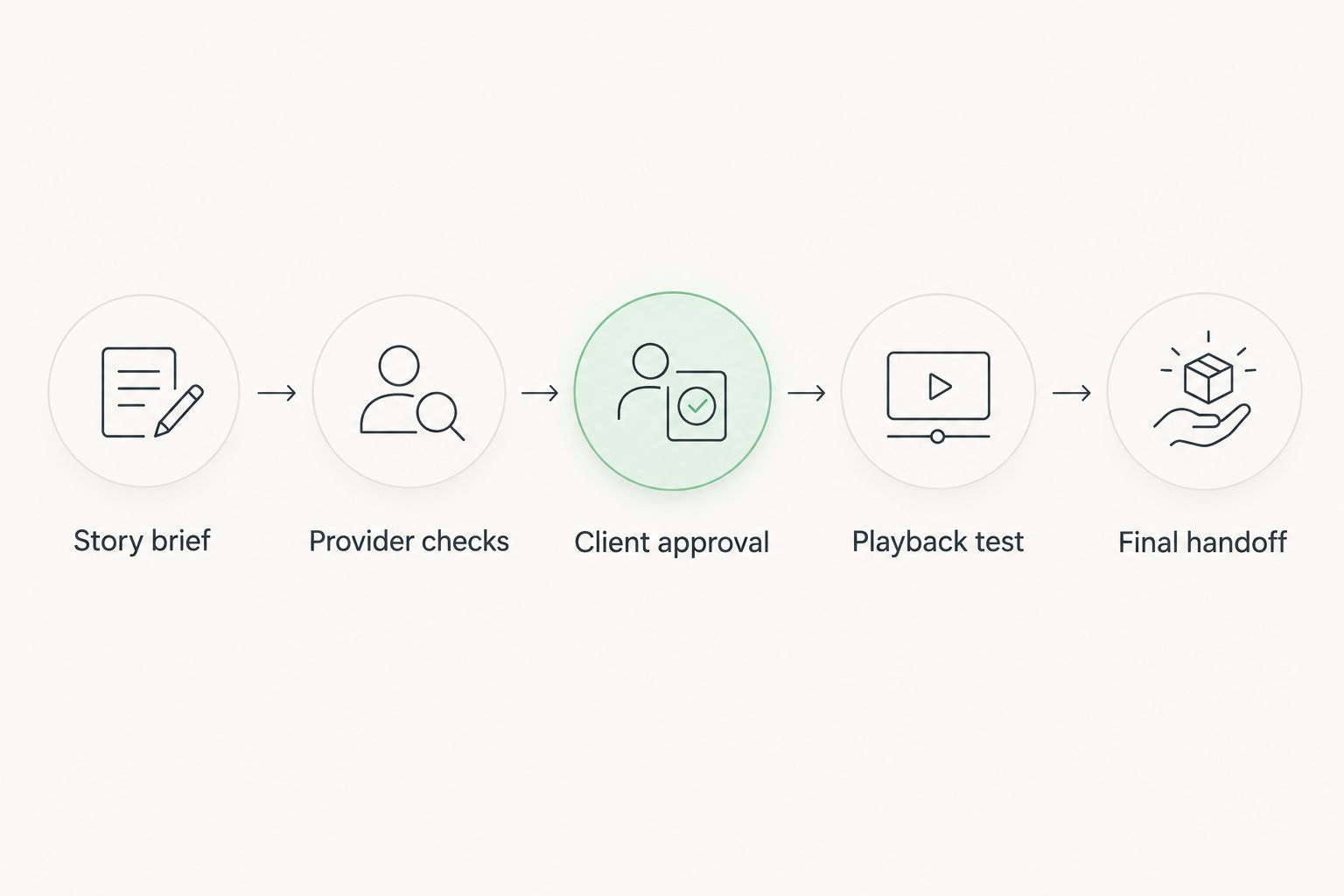
Approve the recording before testing the event playback version.
Compare sourcing options for your event
Choose the route around who needs to control the work. Direct commissioning suits a planner who wants to manage the provider relationship; a client-led order leaves creative purchasing with the client. Review-led research helps you prepare a shortlist but does not replace the commission itself.
| Option | Best for | Main advantage | Key limitation |
|---|---|---|---|
| Direct custom song commission | Planners managing the brief and supplier relationship | Keeps creative requirements and event requirements in one conversation | You must check the provider’s approval process, deliverables, and terms yourself |
| Client-led custom song order | Clients who want to own the creative decision | Leaves the personal story and creative choices with the client | The planner still needs an approved file, permissions information, and a usable cue |
| Independent musician commission | Planners seeking a directly negotiated creative brief | Lets you discuss the assignment with the person being commissioned | Scope, approvals, recording deliverables, and permissions need explicit agreement |
| Existing approved recording | Events where a new personalized song is not essential | Avoids the custom songwriting and approval process | It does not tell a newly commissioned personal story; usage permissions still need checking |
| Custom Song Reviews research | Planners comparing custom song services before ordering | Provides an independent review and comparison starting point | It is not the commissioning provider and cannot replace order-specific confirmation |
Pick the process you can manage, not the option with the strongest emotional pitch. If the client cannot supply an approver or a usable brief, resolve those gaps before commissioning original music.
Common mistakes event planners make
Ordering before deciding where the song fits
A surprise gift and a scheduled performance are not interchangeable. Decide whether guests are expected to listen quietly, watch accompanying images, or continue socializing. Build the commission around that decision rather than inserting the finished song wherever space remains.
Letting every stakeholder send separate feedback
Family members, executives, and hosts can disagree about tone without anyone being wrong. Collect their input, resolve conflicts with the designated approver, and send one instruction set. Do not make the songwriter arbitrate the client’s internal disagreement.
Using private stories in a public setting
A detail suitable for a personal gift can embarrass someone in front of colleagues or extended family. Mark sensitive material in the brief and obtain approval for the intended audience. Memorials deserve particular care around family relationships, beliefs, and details the client does not want shared.
Treating the delivered link as the playback plan
The provider’s delivery method and the venue’s playback method are different parts of the job. In your 2026 event plan, require a tested final file, a named cue owner, and a backup. Do not discover the access requirements during the introduction.
Assuming the event recording can be posted anywhere
The client’s wish to share the moment does not establish the permitted use of the song. Confirm the relevant terms before adding music to a public highlight reel or your promotional portfolio. Keep that decision separate from approving the live event cue.
FAQ
What's the best custom song service for event planners?
The best custom song service for event planners is the one that confirms your approval process, delivery requirements, and intended uses in writing. Compare candidates against the same brief rather than choosing from samples alone.
Can I use a custom song at a corporate event?
Use a custom song at a corporate event only after confirming the intended use under the applicable terms. Approve the workplace references and audience suitability separately from the music itself.
Should the event planner or the client order the song?
The person responsible for managing the brief and approvals should manage the order. If the client orders directly, the event planner still needs the approved audio, permissions information, and playback instructions.
How early should I commission a custom event song?
Set the commission schedule backward from your final playback test and the provider’s confirmed delivery commitment. Include time for client decisions and any agreed corrections; do not assume a universal turnaround.
Can I request changes if a name is pronounced incorrectly?
Confirm the provider’s correction process before ordering. Supply pronunciation guidance in the brief and check the recorded pronunciation during the approval stage.
Can the videographer put the custom song in a highlight film?
Confirm permission for video inclusion and the film’s intended publication before the videographer uses the song. Event playback permission should not be treated as permission for every subsequent use.
How does Custom Song Reviews help with event music planning?
Custom Song Reviews helps consumers compare custom song services for occasions including weddings, memorials, anniversaries, and birthdays. Use its reviews to prepare your shortlist, then obtain order-specific answers from the selected provider.
One last thing
Rehearse the introduction as carefully as the song. Tell guests what they are about to hear without revealing the lyric’s strongest personal detail in advance. A concise introduction gives the recording room to tell the story.
For your next 2026 event, write the host’s cue before you commission the music. If you cannot explain why the song belongs at that exact moment, refine the event brief first.